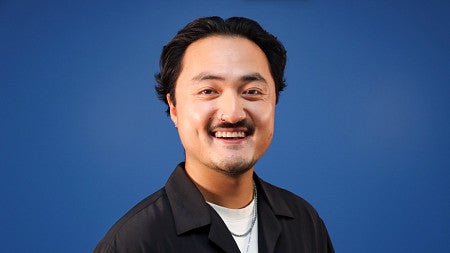
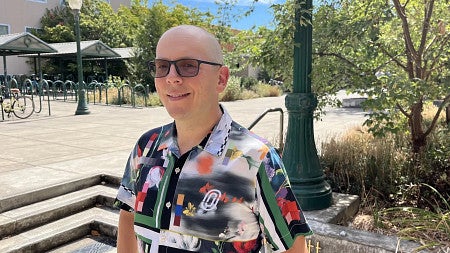
Drew Miyoda, a Double Duck who earned both his bachelor's (’21) and master's (’23) from the SOJC, researched Asian representation in advertising before becoming a marketing specialist at a Chicago nonprofit.
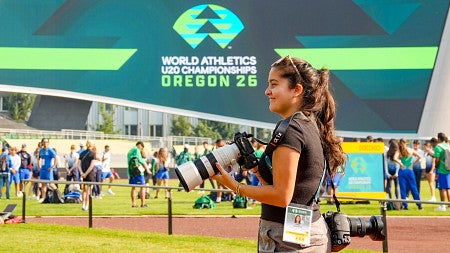
SOJC Teaching Professor Kelli Matthews' new summer practicum gave students a chance to produce photos, video, writing, and social content for two of the year's biggest track meets.
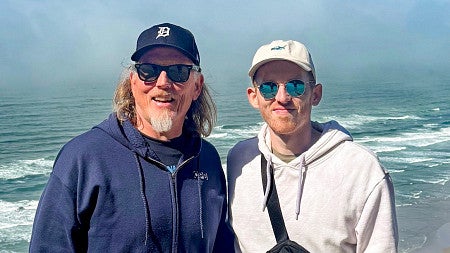
When McKain Williams enrolled in the UO’s Multimedia Storytelling Master’s program, he didn’t expect his father, Kurt, to become his classmate. But the two were drawn to the program for similar reasons.
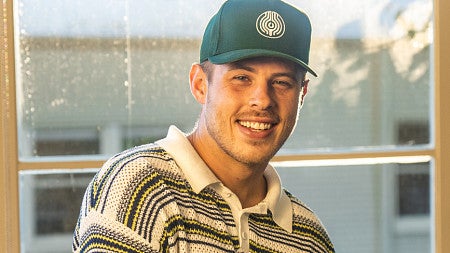
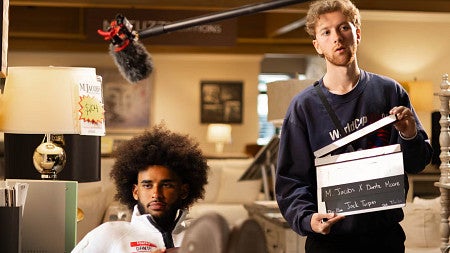
Jake Wilmink ’19 left a comfortable career at an ad agency for something harder. Now he directs Dunkin' campaigns at Artists Equity, where he works with Kylie Jenner.
SOJC and Lundquist College of Business operate the Oregon Accelerator, a student-run sports marketing and communication agency that’s helping to promote Oregon quarterback Dante Moore.
SOJC Assistant Professor Maxwell Foxman spoke to Lookout Eugene-Springfield about his love of games and his research, which involved creating a test readers can use to assess the authenticity of images.
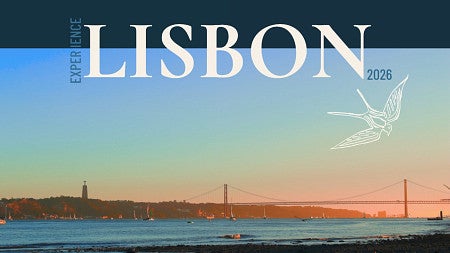
Experience Lisbon is a digital magazine created by 12 SOJC students who traveled to Lisbon over the summer to report on artists, musicians, designers, chefs, and other creative voices shaping the city.
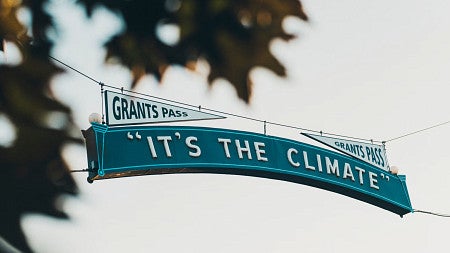
John Sutter, SOJC assistant professor of environmental media, wrote a long-form feature article for The Guardian about wildfire smoke deaths in Oregon, which has the highest rate in the country.
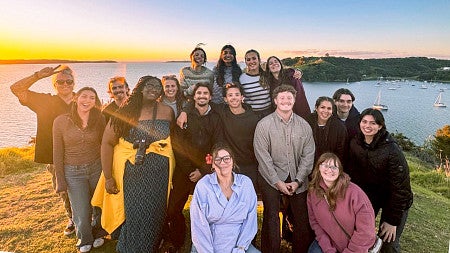
Tales from New Zealand Aotearoa is a collection of stories, reflections, and creative work produced by SOJC students during their summer study-abroad program in Aotearoa, New Zealand.
Journalism grad Leo Heffron ’26 interviewed Eugene-area residents—including two SOJC professors—who were living in New York City and Washington, DC, during the terrorist attacks on 9/11.