
SOJC's Snap AR Scholars are helping to preserve a centuries-old Coquille legend.
by Leo Heffron, class of ’26
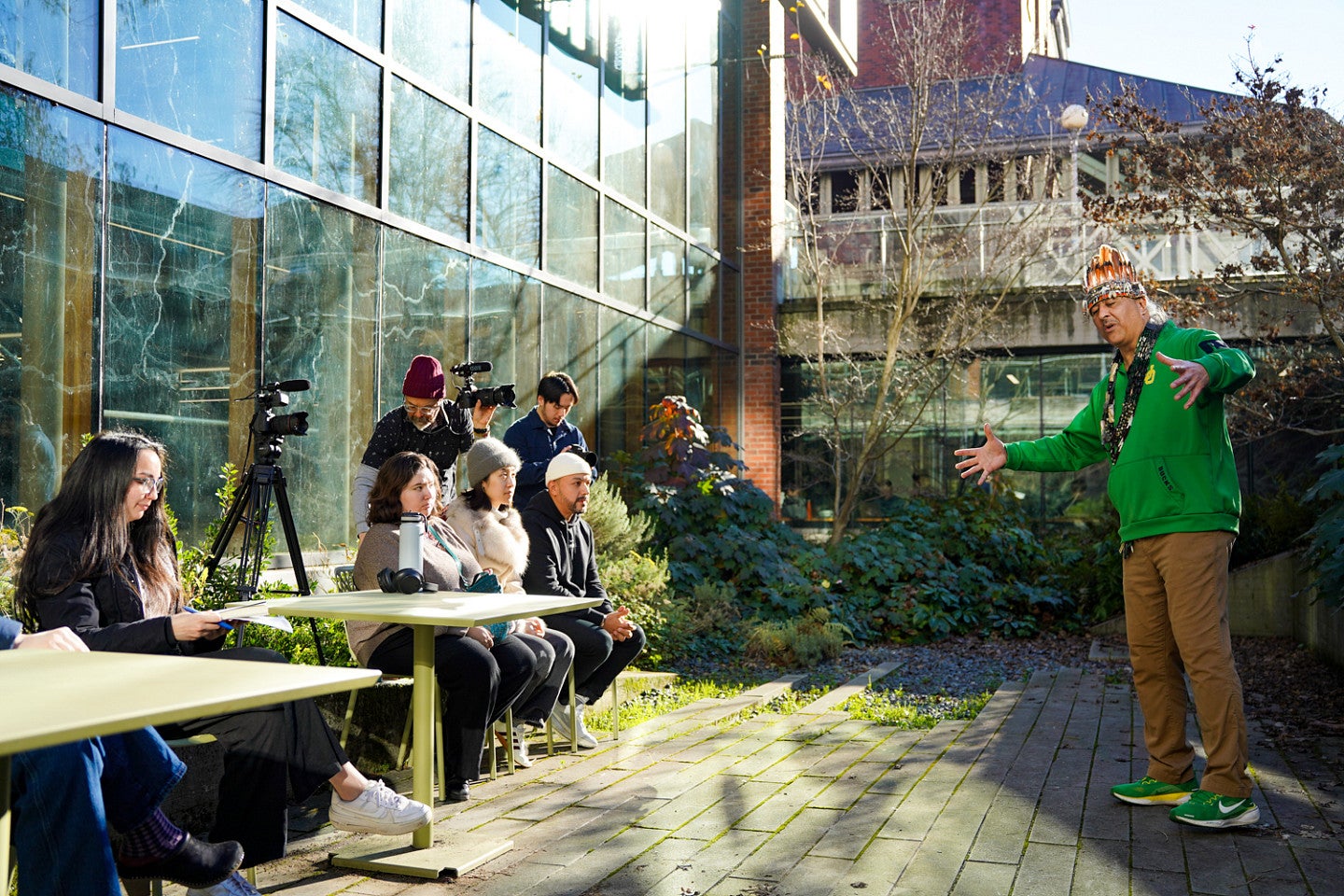
Jason Younker has been telling stories all his life.
As the past chief of the Coquille Indian Tribe in southern Oregon, he has forever been part of a culture rooted in storytelling.
“My uncle told me that to be a good storyteller, you have to be a convincing liar,” Younker said. “You have to convince people that they are in the woods, around a campfire, even when they aren't — and make the hair on the back of their neck stand up.”
But in today’s rapidly changing media landscape, oral storytelling, which has been central to the Coquille (pronounced ko-KWEL) Tribe for thousands of years, is becoming increasingly fragile and difficult to sustain.
“We have a lot of stories out there that are just kind of floating around, and if one person doesn't tell the story that they've been entrusted, it simply dies,” said Younker, a UO associate vice president and advisor to the UO president on sovereignty and government-to-government relations.
Enter Snap AR Scholars, a student-led social impact team that is using immersive media like augmented and virtual reality to preserve and modernize one of the Coquille’s most enduring tales: the story of Sasquatch.
A Duck connection leads to Indigenous storytelling
Snap AR Scholars is based in the Oregon Reality Lab (OR Lab) at the UO School of Journalism and Communication (SOJC) in Portland. Danny Pimentel, assistant professor of immersive media psychology and director of the OR Lab, oversees the group and teaches nontechnical students how to create augmented reality (AR) experiences that address real-world challenges.
“I try to emphasize that any work we do in this space is beyond novelty,” Pimentel said. “We’re not just using AR because it’s cool — it’s because it can actually affect people in a meaningful way.”
Each year, the team partners with an organization, ranging from global nonprofits to state agencies, to build AR projects that raise awareness and inspire action rather than just showcase technology.
This year’s project began after UO Portland Vice President Jane Gordon connected Pimentel with Younker. Their conversations centered on Indigenous storytelling, cultural preservation and the lingering fear of termination, stemming from the tribe’s erasure in the 1950s.
Using Sasquatch to maintain federal recognition
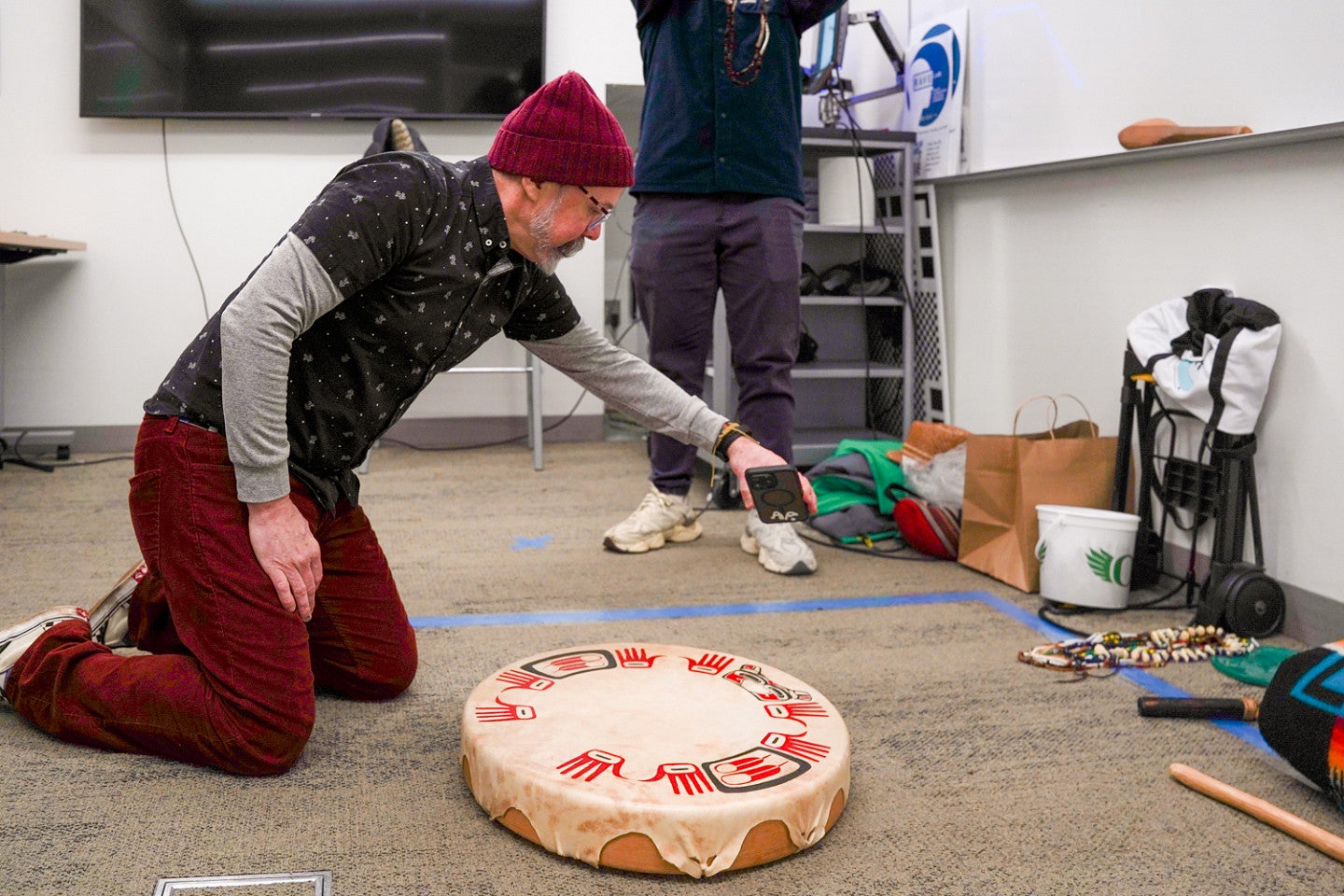
For the first 22 years of his life, Younker lived as a “terminated Indian,” he said. His tribe was erased in 1954 by the Western Oregon Indian Termination Act, which removed it from federal records and stripped it of its status as a sovereign nation.
It wasn't until 1989 that the Coquille’s tribal recognition was restored.
Now, Younker worries it could happen again. The Trump administration has blocked over $300 billion in funding for Native communities, and many Indigenous people fear their federal status could be in jeopardy.
“It would be horrible if in my lifetime we were terminated again,” Younker said. “If we can get the Coquille's name on anything, it's harder to terminate us.”
That’s why he was eager to work with the Snap AR Scholars, who use Snap’s Lens Studio to build immersive stories designed to educate and spur action. Members of Snap AR Scholars are students in the SOJC’s Immersive Media Communication Master’s, Multimedia Storytelling Master’s, and Communication and Media Studies PhD programs.
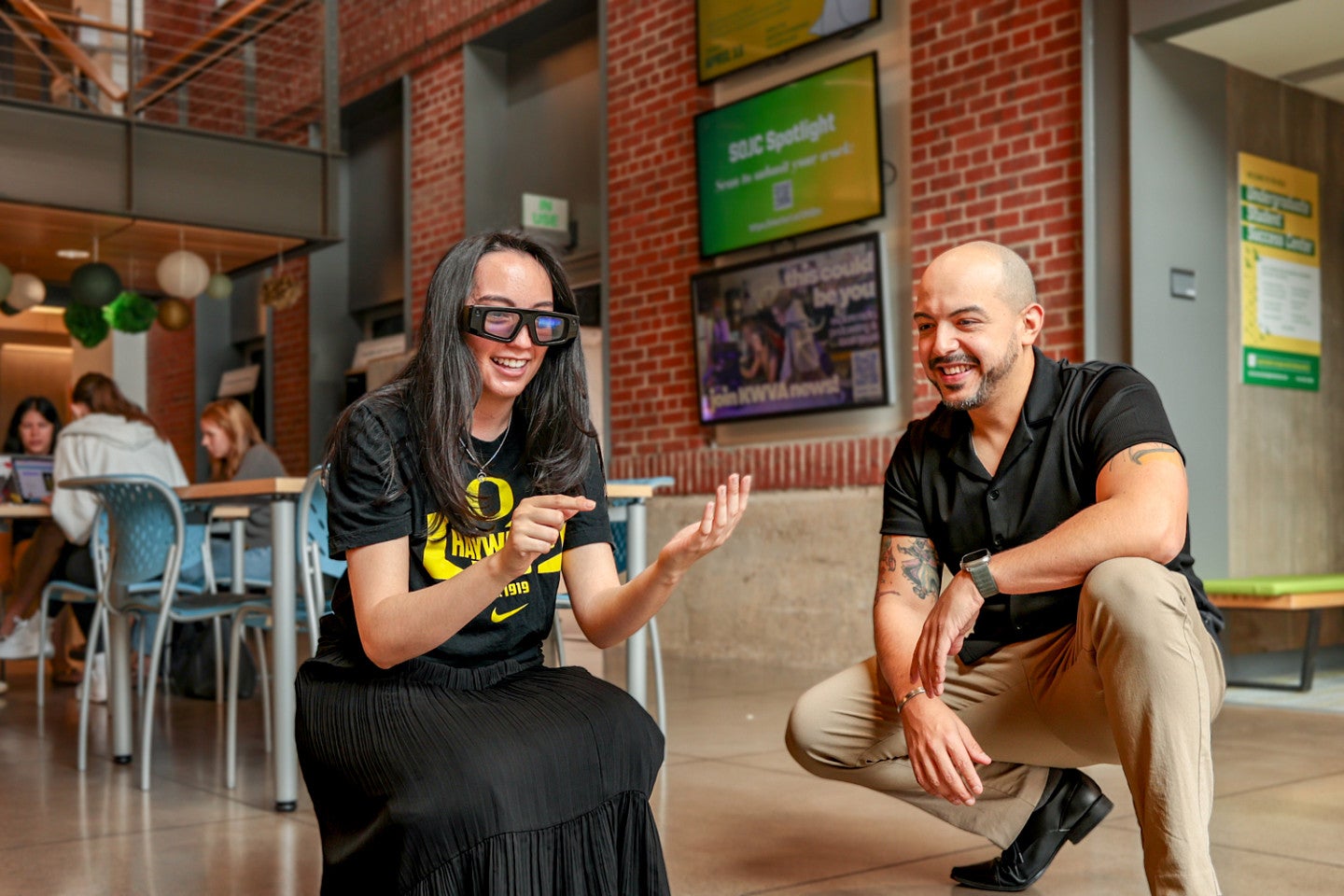
Younker asked the students to highlight the Coquille story about Sasquatch, and he told them the tale. Then the Snap AR Scholars — led by Leila Okahata, creative director, and Songyi Ahn, research director — began adapting the story into an interactive AR experience.
The goal is to use augmented reality to deepen empathy and place-based connection to Coquille lands and heritage, serving as an extension of Younker's scholarship and experience, Okahata said.
“There are only a handful of Coquille stories that survived termination, including this one about Sasquatch,” Okahata said. “So this is an opportunity for Snap AR Scholars to help preserve Indigenous history by telling it through the voice of someone who has lived that history.”
Telling the story of Sasquatch
The story of Sasquatch was traditionally told to scare kids from wandering into the woods. If they did, they were warned, Sasquatch would eat them.
As the story goes, Sasquatch was a terrifying creature who preyed on humans and animals alike, ripping their hearts out and drinking their blood. At one point, the community had had enough, and they concocted a plan to kill Sasquatch.
As the story goes, a brave Indian played dead on a trail, tricking Sasquatch into carrying him to Sasquatch's lair, where the Indian killed Sasquatch by stabbing him in the left heel with an obsidian blade.
Sasquatch's body was thrown into the fire, and his scattered ashes transformed into mosquitoes, who declared they would torment humans forever.
Reliving the Sasquatch tale in augmented reality
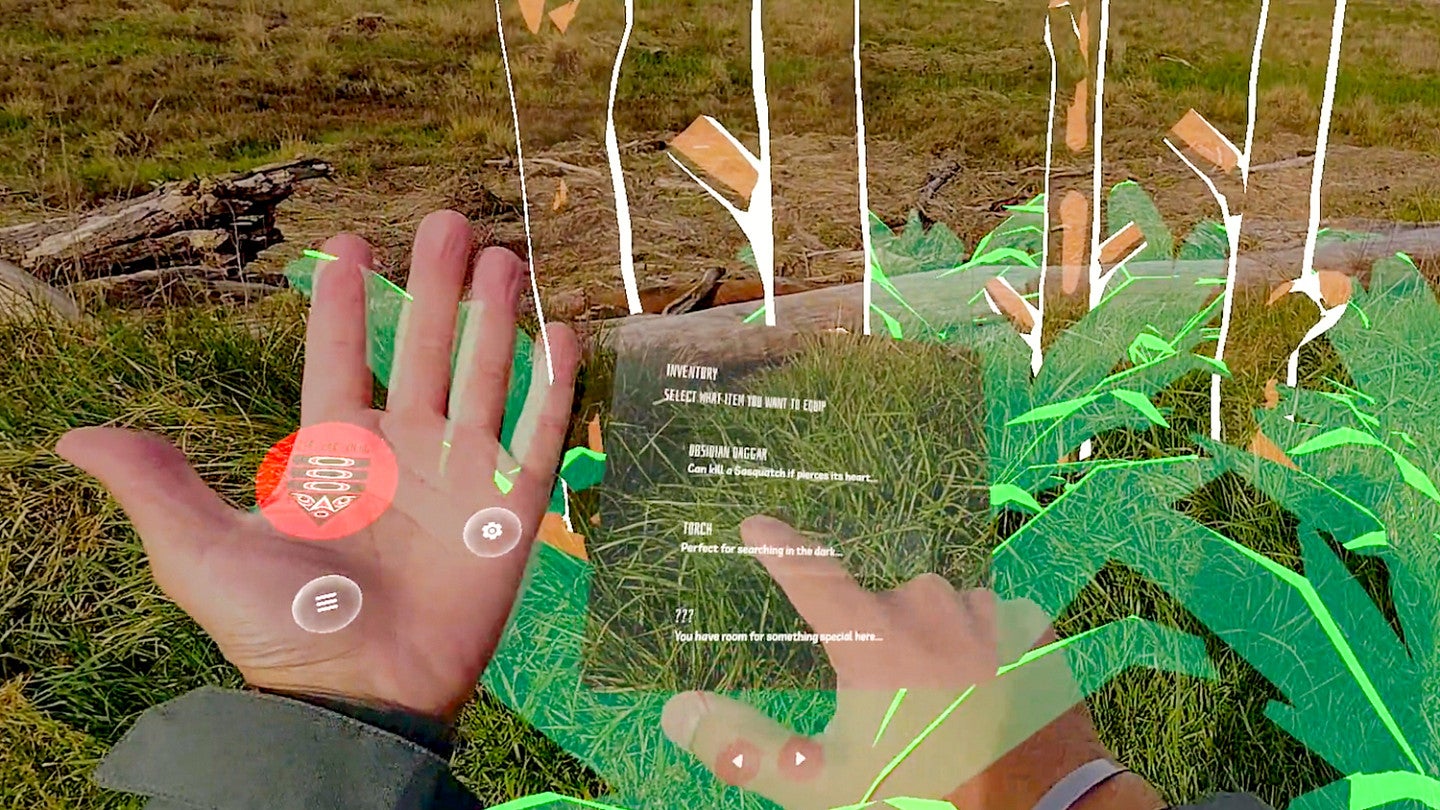
The Snap AR experience takes players wearing AR glasses through that story. Users have to hold still to avoid being seen by Sasquatch while searching for the obsidian blade to kill him. Along the way, they talk to a younger Sasquatch in the lair who reveals the older Sasquatch's weakness.
Once Younker and the team began collaborating, Younker made one thing clear: Setting and authenticity are essential to telling a compelling story. When Younker tells this same tale to a captive audience huddled around a campfire, he keeps myrtle leaves in his pockets to toss into the fire to create a burst of smoke when describing how they burned Sasquatch's body. He stages people in the woods to snap sticks, adding drama by making listeners believe there may be a Sasquatch nearby.
“Whenever I told it, I’d have kids just glued to how I was acting,” Younker said.
Scene-setting is vital for Younker, and the AR version attempts to do the same by similarly immersing users in the scene.
“You’re actually putting on the glasses and acting through the story,” Pimentel said. “We know that there are things that you can do in AR that can affect you in a way that other media cannot. The more interactive you get, the more engaging it might be, the more cognitively you're immersed in the story.”
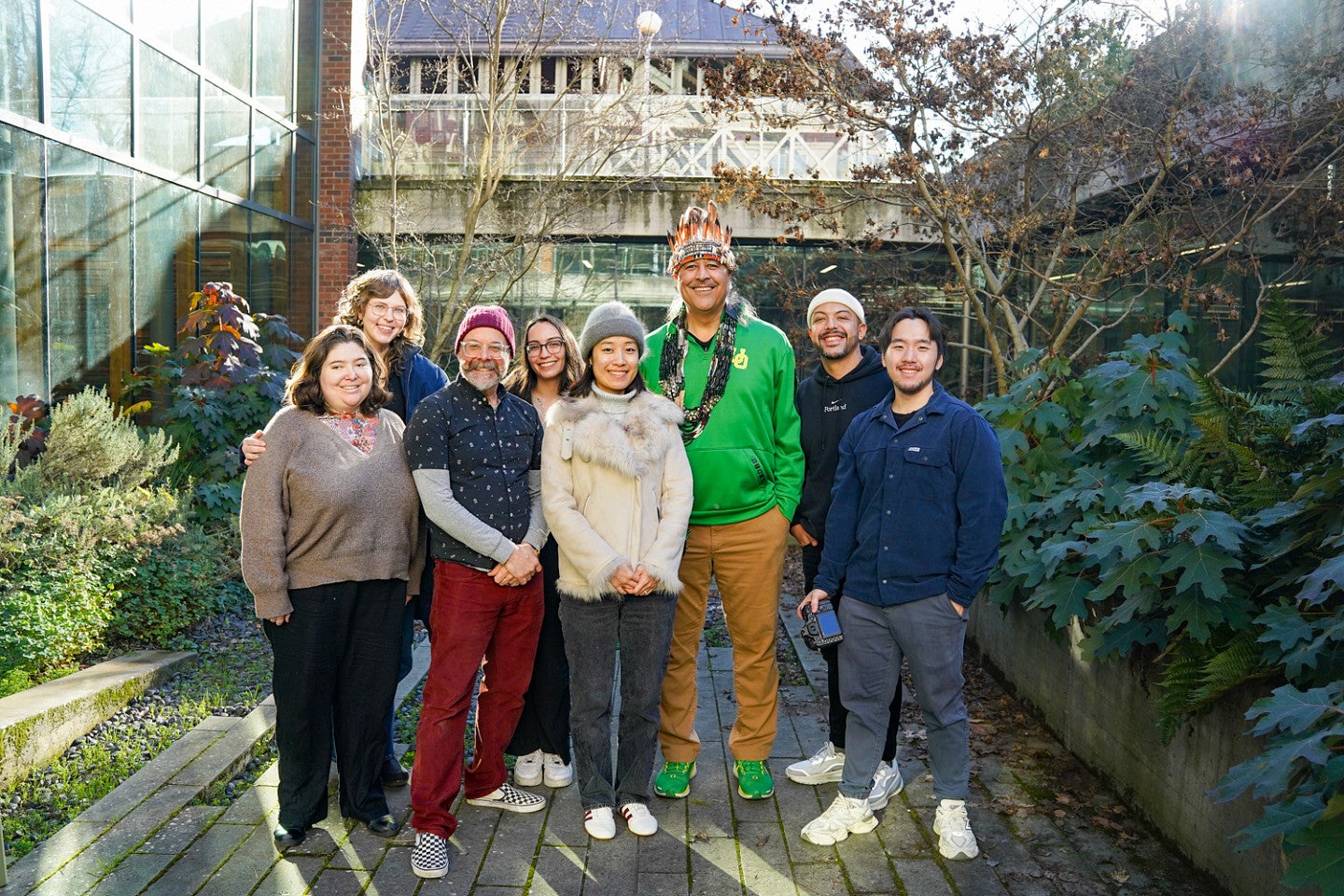
A moving experience: Ko-Kwel: He Carries a Story
Younker was one of the first people outside the team to try out the AR experience called “Ko-Kwel: He Carries a Story.”
“What I see them working on now gives us an opportunity in the future to preserve traditional storytelling when the live version is not possible,” Younker said. “In addition, adding the gaming aspect will be extremely important to the younger generations.”
Already the AR experience is garnering attention. "Ko-Kwel: He Carries a Story" won first place in Spectacles Community Challenge #12, hosted by Snap and Lenslist, and the project was also named a Auggie Award finalist by the Augmented World Expo (AWE) in the Best Societal Impact category.
Last year, the Snap AR Scholars team was among the top five finalists in the best societal impact category for the AWE Auggie Awards. That AR story focused on the environmental issues surrounding Otter Rock on the Oregon Coast.
Now that the prototype is complete, Snap AR Scholars are conducting trials to measure the impact on the audience.
“We want to see if AR and this smart-glasses experience are more effective than traditional media, like reading about their history or just watching some documentaries,” Ahn said.
Younker hopes the immersive experience will go beyond educating users about the stories of the Coquille Tribe. He hopes they will feel empathy.
“I’ve dreamt of the Star Wars scene where Princess Leia says, ‘Help us, Obi-Wan,’” Younker said. “I've always dreamt of that type of animation featuring traditional stories.”
How to experience the story
The experience will be available as location-based entertainment at the OR Lab in Portland, with additional demos hosted throughout the year. It officially premieres in June at the Augmented World Expo (AWE), where thousands of attendees can try it using the Snap Spectacles AR devices. Following the official launch, it will be available on all spectacle devices.
Leo Heffron is a fourth-year journalism major at the SOJC, with a minor in Spanish. He loves to write about many topics, but fashion and social issues are his favorites. You can find his work in The Daily Emerald.