
How hands-on design experience at UO and an Immersive Media Communication Master’s launched Kathleen Darby's career in tech, design and storytelling.
by Ethan Donahue ’26
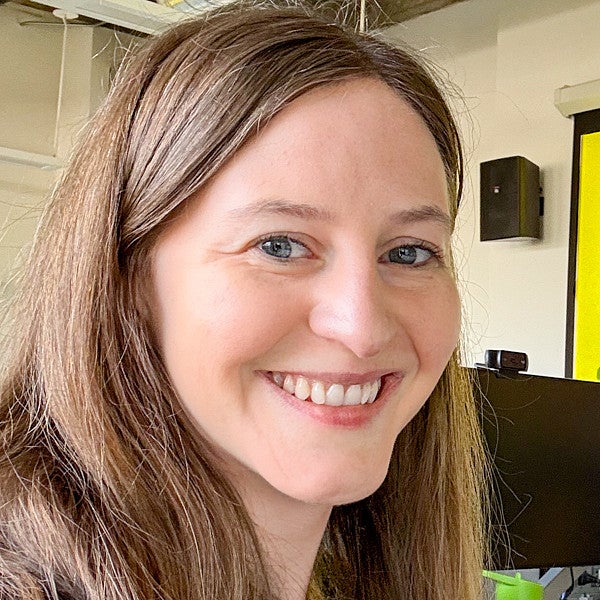
Meet Kathleen Darby ’24
Current job:
Experiential learning designer at Apple in Seattle.
First job out of college:
Presentation designer at Microsoft.
Biggest career accomplishment so far:
Creating the #1 course on Coursera in 2019 — Intro to AI/Intro to Data Science for IBM.
SOJC faculty who made the biggest impact:
Danny Pimentel. Joining his Snap AR Scholars program and taking his classes allowed me to fully immerse myself in new media studies and put my education into practice.
Most useful experience in college:
Joining Snap AR Scholars. The AR experiences we've made have all been shown at Augmented World Expo and have been a great introduction to showcasing immersive experiences and research created for social impact.
Best thing about the SOJC:
The extensive network of bright and driven creators and storytellers. I joined the first Immersive Media Communication Master’s cohort; the 13 of us became fast friends and collaborators, and we still keep in touch today.
At each stage of Kathleen Darby’s career, her work has centered on making complicated information understandable for a range of audiences.
Whether she is translating technical jargon into a visual explanation, turning dense internal material into a training course or helping to build immersive media experiences, Darby uses storytelling as a bridge between complex topics and the people who need to understand them.
Her ability to move between roles in technology, design and communication has shaped Darby’s path from assignments she did as an undergraduate student at UO’s College of Design to projects she finished as a student in the Immersive Media Communication Master’s program — and ultimately to her work with companies such as Microsoft, Amazon, Liquid Wire and Apple.
Gaining practical experience as an undergraduate
Darby first came to the University of Oregon as an art and technology major in 2015. During her time at the College of Design, she built strong skills not only in her classes but through student work opportunities that gave her professional experience before graduation.
She worked for UO Housing as well as University Communications, gaining practical experience with university branding, campus communications and design production.
“I don’t think I would be here today without those opportunities,” Darby said. “I basically got out of undergrad with three years of working experience, and that set me ahead.”
Her advice to current students is to look for opportunities while they are still on campus.
“There’s more than you think,” Darby said. ‘They’re all over.”
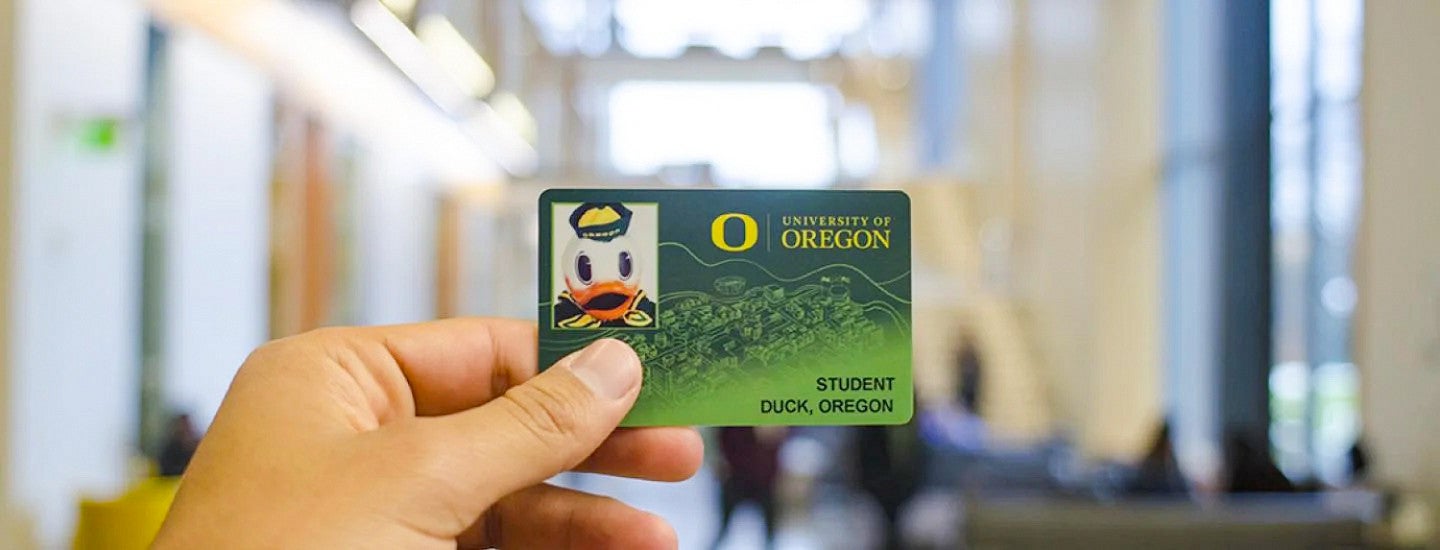
One opportunity she jumped on was entering a competition to design the university’s student ID cards. Her design was selected because of her familiarity with UO’s visual identity, campus geography and student experience. By then, she had spent plenty of time working with UO’s brand and campus materials, so she understood how to create something both functional and recognizably Oregon.
For Darby, the ID card remains a reminder of the value of student work. Those early opportunities helped her understand how design functions beyond the classroom, as something people carry, use and interact with every day.
Building a career in design, technology and learning
After graduating from UO, Darby moved to Seattle and began building a career that blended design with technology.
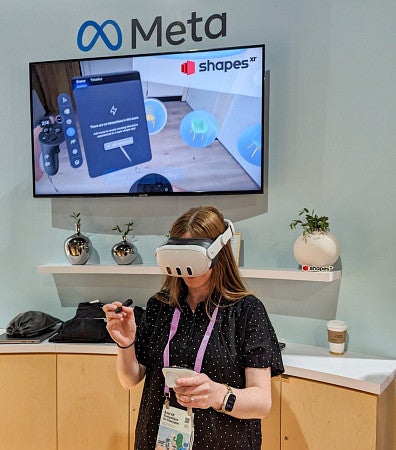
Her first major role after college was at Microsoft, where she worked as a presentation designer. The job involved internal graphic design work, including slide decks and visual materials. But it also placed her in an organization connected to HoloLens, introducing her to spatial computing and immersive media.
“I had never seen anything like it before,” Darby said. “It reminded me a little bit of ‘Star Trek,’ the holodeck. I saw the potential.”
Darby then began working on e-learning courses for clients, including Microsoft and IBM, creating educational content on topics like artificial intelligence, data science and internal workplace training. The work helped her sharpen her motion design skills while learning how to turn technical or dense information into accessible instructional materials.
She later brought those skills to Amazon, where she worked as an illustrator and motion graphics designer for internal workforce training.
When that contract ended, Darby moved into a full-time position at Bamboo, a growth marketing agency. She spent three years there creating digital content for social media marketing campaigns. The role gave her a different kind of professional growth than some of her earlier contract positions. Instead of quickly adapting to one project and moving on, she had more ownership over long-term client work. She learned how to understand creative needs, develop visual strategies and support digital campaigns over time.
“I think one of the strengths I have in my career is that I can give long-term and short-term value to a company,” Darby said. “I think I’m a stronger designer because I have, in a way, hopped around and also stayed at places.”
Returning to UO for a master’s in immersive media
After three years at Bamboo, Darby was ready for another shift. She missed the kind of work that had first excited her at Microsoft: learning about emerging tools, working near technical teams and helping people understand new systems.
That was when she remembered the Immersive Media Communication Master’s program offered through the UO School of Journalism and Communication (SOJC) in Portland. The one-year hybrid online program would allow her to remain connected to Seattle while spending time in Portland.
“I thought if I could just quit my job for a year and really focus on the program, I could get so much out of it, and I’ll be back in the workforce in about a year,” she said.
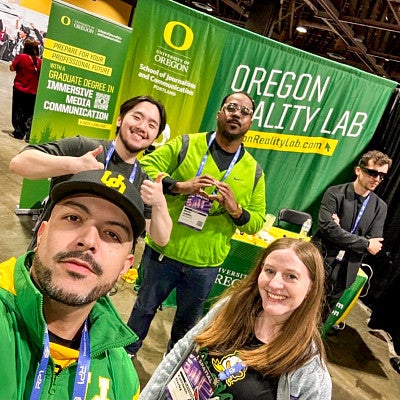
During the program, one of her most significant experiences was with Snap AR Scholars, a student-led social impact team that is using immersive media like augmented and virtual reality to tell important stories. Snap AR Scholars is based in the Oregon Reality Lab (OR Lab) on the SOJC’s Portland campus. Led by Danny Pimentel, assistant professor of immersive media psychology, the program gives students the opportunity to work on collaborative extended reality (XR) projects with real clients and research goals.
For Darby, the program helped connect classroom learning to professional practice.
“It gives you an actual researchable XR design project done by the end of the year that you can show off,” Darby said.
Turning a master’s degree into the next career step
After graduating from the Immersive Media Communication Master’s program in 2024, Darby continued building a career around technology, design and communication.
She worked at Liquid Wire, a Portland wearable technology company that developed flexible conductive material with uses in sports, wearables and robotics.
As part of the marketing team, Darby helped explain the company’s technology to different audiences. That meant working closely with engineers and technical experts, then turning complex information into visuals and language that potential partners, clients or general audiences could understand.
Today, Darby works as an instructional designer, sometimes also called an experiential learning designer, at Apple. Her current role involves creating internal training materials using skills she’s developed across her education and career: graphic design, motion graphics, content organization, video editing and educational strategy.
“It’s really more just a function of taking content that needs to be communicated internally and turning it into a course,” she said.
Staying involved with XR projects and competitions
Even after completing her master’s degree in 2024, Darby has remained involved with Snap AR Scholars as an alum. She continues helping with immersive media projects while working full-time, building on the collaborative and experimental work she began as a graduate student.
“I've continued to stay involved with the SOJC and Snap AR Scholars because it keeps me connected to emerging ideas, new technology and a community of creators shaping the future of XR,” Darby said.
In the spring, she participated in OceanX's Onshore Hackathon, hosted at the OR Lab, where five interdisciplinary teams were challenged to create a working augmented reality demo using Snapchat Spectacles to answer the question: How can wearable AR be used to tell a meaningful ocean story?
Darby’s team, which included Isaac Wu, Will Nusbaum and Ramtin Ranjpour, created Equilibrium, an ecosystem-building experience designed to foster empathy and stewardship for the ocean. Players build their own underwater habitat and then respond to environmental challenges, such as rising temperatures, changing oxygen levels and ecosystem imbalance.
By allowing users to physically construct and care for their reefs, the team explored how XR affordances like embodiment, spatial presence and interactive simulation can transform abstract environmental concepts into ecosystems that foster emotional buy-in in the real world.
After a rigorous two-day hackathon, demo showcase and presentation to the OceanX team, Darby’s team won the Onshore Hackathon.
“Experiences like the OceanX hackathon are why I continue to return to the program,” Darby said.
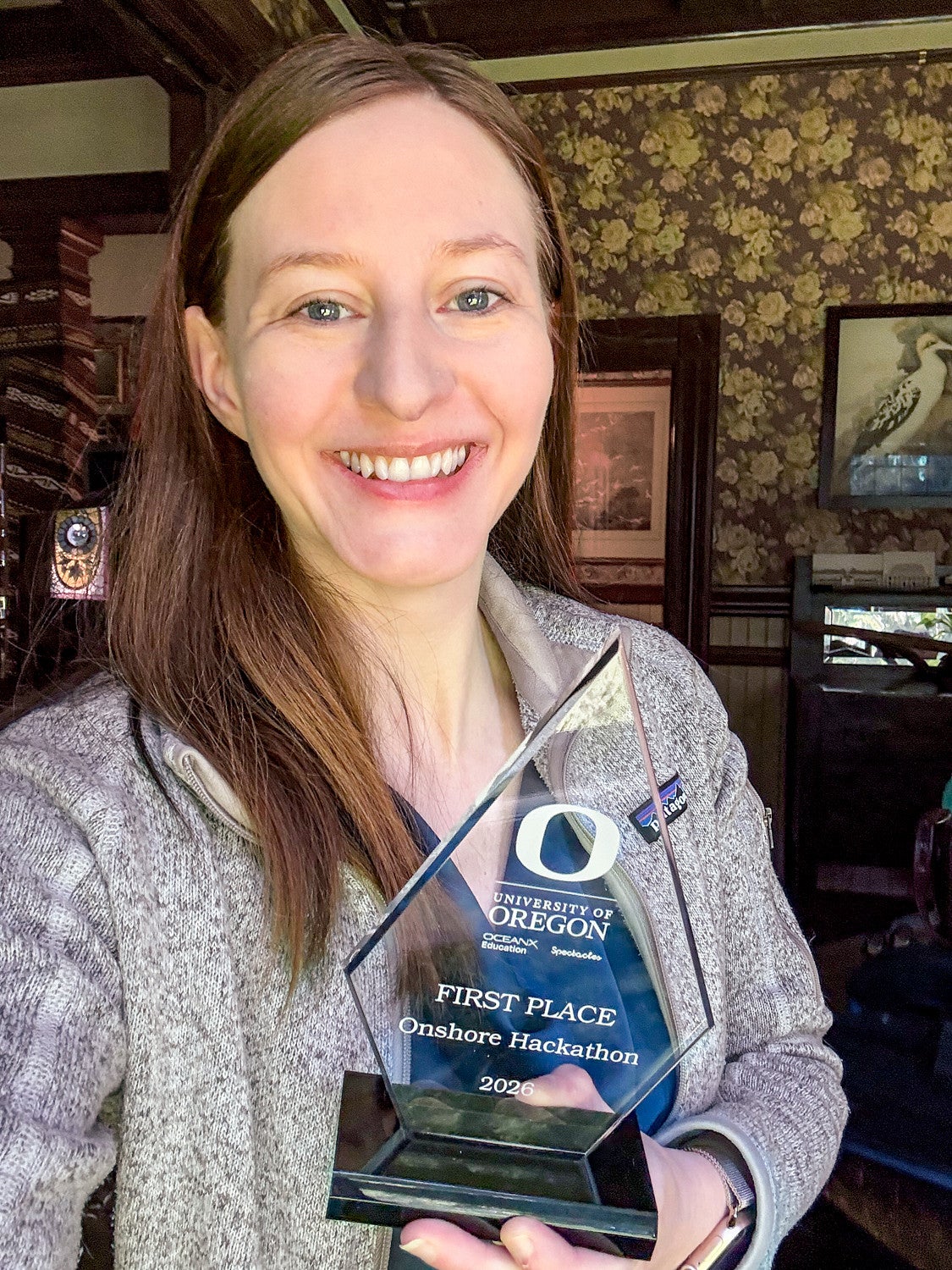
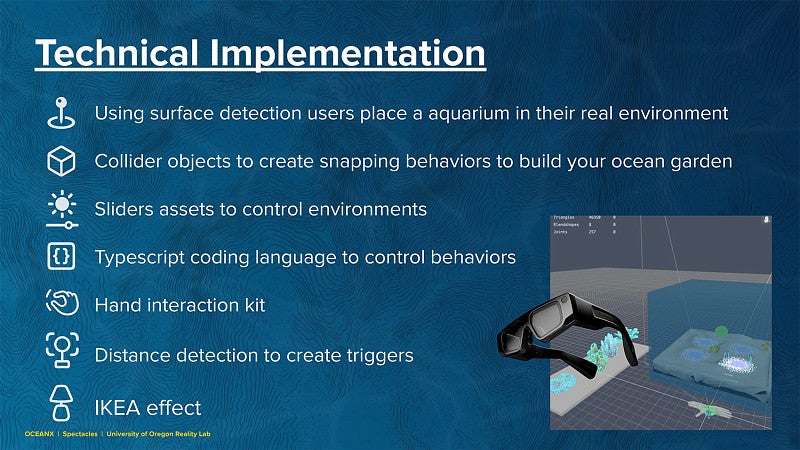
At the OceanX Onshore Hackathon, teams were asked to create a working augmented reality demo using Snapchat Spectacles to answer the question: How can wearable AR be used to tell a meaningful ocean story? Kathleen Darby’s team used the pitch at right to outline their contribution—Equilibrium, an ecosystem-building experience designed to foster empathy and stewardship for the ocean—which won first place.
Storytelling is at the heart of all Darby’s jobs
For Darby, the path from undergraduate designer to immersive media graduate to instructional designer reflects the changing possibilities of a communications education. Her career has moved through marketing, technology, education and design, but storytelling has remained at the center.
“I think companies like Apple are looking for storytellers more than ever,” Darby said. “Technology continues to advance, and they need people who understand it, can help explain it, either visually or in words.”
That, she said, is where SOJC students can find opportunity.
The platforms may change. The technology may change. The job titles may change. But the ability to communicate clearly, visually and thoughtfully remains valuable.
“Journalism isn’t dead. Communication isn’t dead,” she said. “It’s just evolving. And the market is hungry for people who can be in that sweet spot.”
Ethan Donahue ’26 is a recent journalism and history graduate. He is pursuing a career in investigative and conflict journalism.