
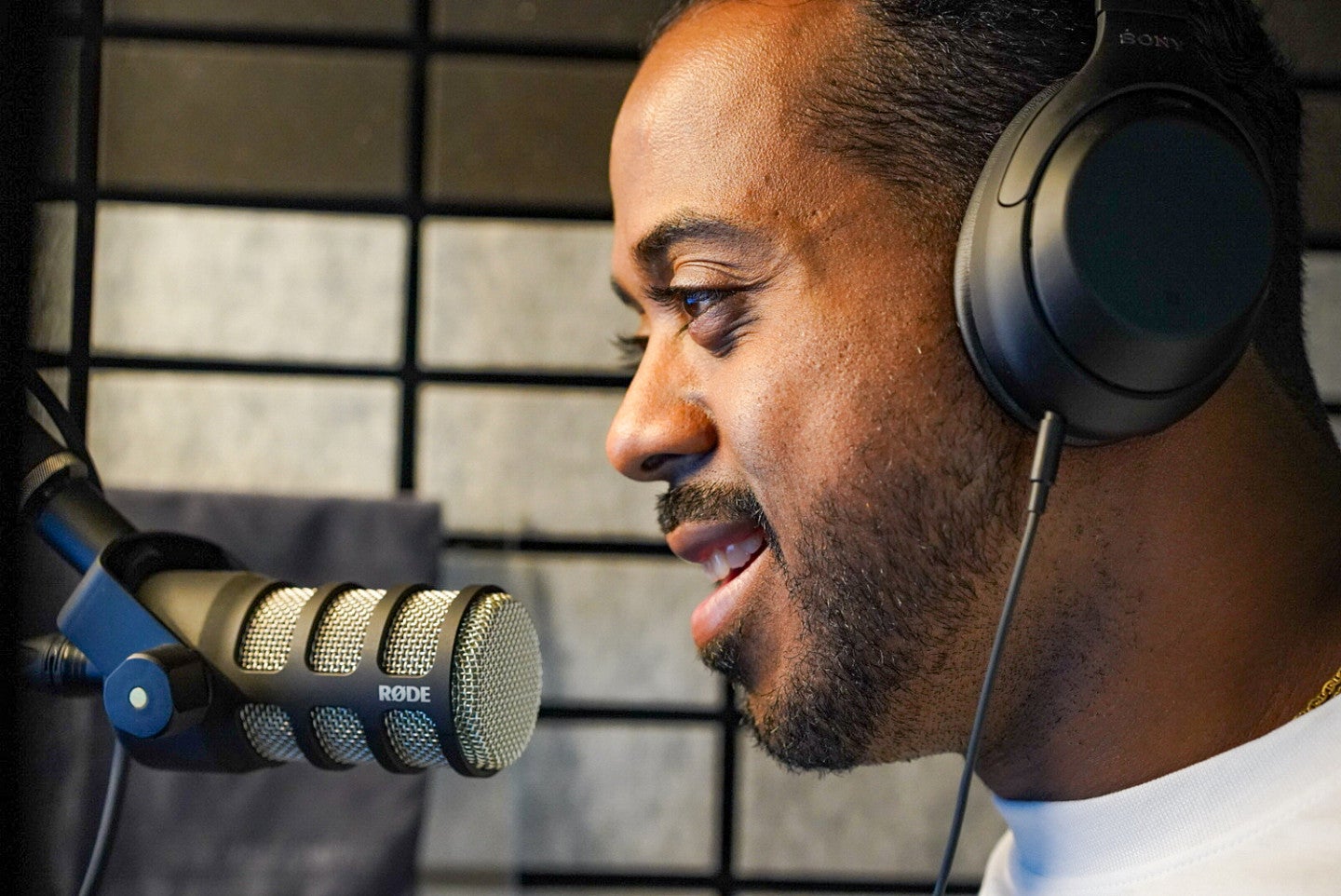
Berto Jolliffe is blending innovation, technology and accessibility to explore how stories will be experienced in an increasingly immersive world.
by Ethan Donahue, Class of ’26
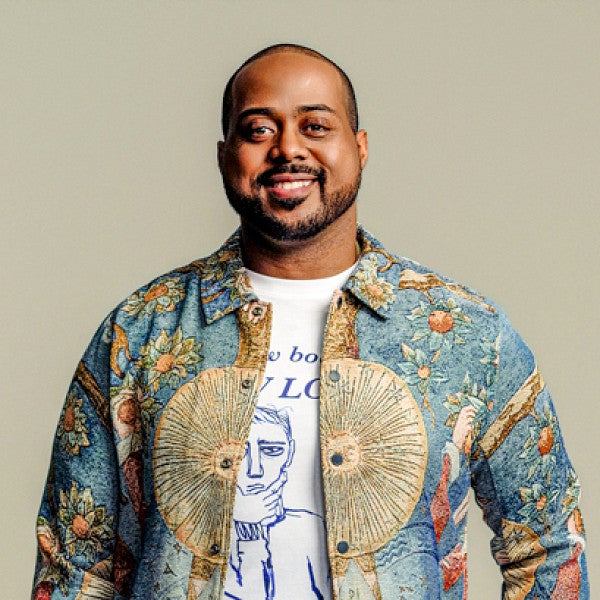
Meet Berto Jolliffe
Why the SOJC Immersive Media Communication program:
The experience of the professors and alumni jumped out at me. This is a place where I would not only learn but potentially build the next frontier in XR.
SOJC faculty who made the biggest impression:
Program Director Donna Davis, made a fantastic impression. Her energy is contagious, and she shared all the amazing things this program has accomplished. Also Danny Pimentel, director of the Oregon Reality Lab, has an unwavering passion for the XR space. He makes you feel like part of the team and lets you share your voice and ideas, which will be incorporated into cutting-edge XR experiences.
Best experience you’ve had in the SOJC:
I’m part of the Snap AR Scholars program, and it’s pushed me to learn new coding languages, operating systems and use different AI applications. And the best part? I’m collaborating with other students to gain real-world experience working with potential brands and partners.
Best things about the SOJC:
You get to meet so many genuine people from all walks of life, and they’re all incredibly talented.
Millions of people have heard Berto Jolliffe speak. He’s the voice behind a multitude of familiar audio scripts, from the “Crazy Good!” Pop-Tarts tagline to Paw Patrol news segments. Still, for this Immersive Media Communication Master’s student, voice work is only the beginning. His central interest at the UO School of Journalism and Communication (SOJC) is how stories function alongside constantly adapting technology and how immersive storytelling will reshape the way humans experience the world.
Long before he was voicing characters, Jolliffe was already fascinated by how communication works. While earning his MBA with a specialization in information technology management, Jolliffe found himself gravitating toward the interactions between storytelling and technology, both for those creating the stories and those consuming them.
His storytelling journey started on the morning commute
One of his first professional steps into media came via radio. As a business student, Jolliffe interned at a Clear Channel (now called iHeartMedia) radio station, where he learned how broadcasting, entertainment and storytelling come together behind the scenes.
“I worked at a radio station, but I wanted to learn the business side of it,” Jolliffe said. “I was on the morning show and just understanding how important the stories were,” especially in the early morning when people were listening to the radio while driving to work.
Radio showed him something that would later define his career: His voice was not just content, but a companion in people’s daily lives. That early exposure to broadcast media planted the first seed of what would become a career-long focus on how stories reach people in everyday moments.
Success driven by an innovative mindset
After grad school, Jolliffe left radio and a government job and entered the corporate technology world through a job at a USAA call center. The financial services company offers insurance and banking products to military personnel, veterans and their families. There, he quickly realized that innovation was a way to be heard, even in a massive organization.
“Our nights sometimes would be super slow,” he said. “So I would just submit ideas all night — and some of those ideas would win competitions.”
Those wins caught the attention of mentors and higher-ups, who supported his ascension in IT and innovation roles focused on performance, application testing and accessibility functions.
One pivotal project centered on accessibility support for people with visual impairments. The project involved working on a team with visually impaired colleagues, which caused him to rethink his approaches to technology and audience.
“We had two visually impaired people — one who was (born) fully blind and one who had become blind later in life,” Jolliffe said. Those different perspectives caused the rest of the team to shift their focus and identify various audiences that might have been overlooked.
That work taught him that technology is never neutral — it always includes some people and excludes others. Those lessons now inform how he approaches immersive media, where the line between digital and physical space is even thinner.
At that same time, Jolliffe was pitching new ideas, filing patents and investigating how technology has advanced. The ideas he had submitted earlier became the patents he now submits with USAA. While the patents are owned by USAA, contributors are compensated for their ideas once the patent is pending.
Some of the patents Jolliffe has contributed to include configuring hologram interaction with vehicle passengers, automatic vehicle accident notifications within a distribution network, anonymized transfer of personally identifiable information, techniques facilitating privacy and protection within the metaverses, and different systems and methods for incentivizing task performance using token-based digital media access.
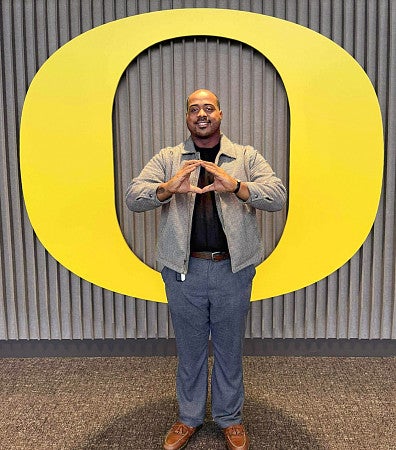
Turning ideas into products
Outside of work, Jolliffe was also building his own projects. In 2020, he launched Evntures, a mobile app designed to help people discover local events and experiences in real time — an idea inspired by his travels abroad.
“That was my baby,” he said. “Evntures launched, and I had almost a thousand downloads, but then COVID hit and all the events shut down.”
The project, while disrupted by the pandemic, taught him how to turn an idea into a real product — from concept to app store — and reinforced his belief that technology should connect people to places, not pull them away from it.
While on parental leave after his son was born, and with the COVID pandemic just beginning, Jolliffe found himself with an abundance of something he didn’t often have: time. Instead of slowing down, he dove headfirst into voice acting, a creative expression he had held an interest in before but hadn’t deeply explored.
“During COVID, there were a lot of these life-changing catalysts from 2019 to 2021,” Jolliffe said. “I think I had moved up enough in IT, and I was, like, ‘OK, I did that. How else can I challenge myself?’ I had met some friends, and they talked about voice-over acting, and I started doing auditions. I became a voice in art shows and ads and different things.”
What began as a curiosity eventually became a career. He has voiced characters like Sam Stringer on “Paw Patrol: Mighty Pups” and Buster Splits in “Mutant Boxer” and participated in ad campaigns for brands including Beyond Burger, Ford, Pop-Tarts and Del Taco.
Sharing his knowledge in an innovative book
As his voice acting career grew, Jolliffe also began thinking about how to make the industry more accessible — not just for professionals, but for kids, students and anyone curious about finding their voice. That impulse led him to publish an illustrated book about voice acting, “Ahhh, So You Want to Be a Voice Over Actor!?”
“So many people kept coming to me saying, ‘Hey, I’m interested in voice-over. How do I get started?’” he said. “I was like, how can I put this in a way that’s consumable?”
Rather than writing a dense, technical manual, Jolliffe wanted to create something that reflected how people actually learn.
“All the books that I’ve seen on Amazon were like 100, 300 pages of just words,” he said. “And I was like, how can I make this consumable for kids and adults?”
Inspired by illustrated nonfiction and visual storytelling, he designed the book to be approachable for readers from elementary school through adulthood, blending explanation with imagery, QR codes and step-by-step guidance.
The project became a multi-year effort. Jolliffe began writing in early 2023, finished a first draft by fall, and then worked through a full publishing process with Bird House Publishing in Houston.
“It was a two-year journey,” he said. “It was costly, but I was willing to pay that cost so I could gain and learn from that journey.”
Working with editors, illustrators and designers, he learned to shape his ideas for an audience — a process that mirrored the way he approaches immersive media.
“You really have to be very particular in what you want,” he said. “If you do not say what you want, you cannot assume that somebody else knows what you want.”
Jolliffe has taken the book into classrooms and libraries, using it as a way to encourage young people to think about communication, creativity and the power of their own voices.
“Once you’re an author, you can do author talks,” he said. “I go speak to kids … just telling them about voice-overs and the power of your voice.”
For Jolliffe, the book is not just about voice acting; it’s about giving people permission to imagine themselves as creators in a world increasingly shaped by media and technology.
Even as AI is taking on roles formerly held by workers, human expression is still important, he said. “You’re still going to have a voice no matter what.”
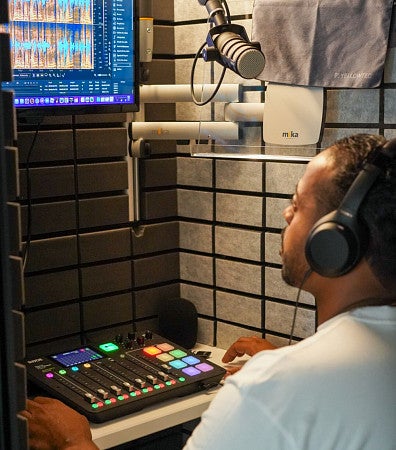
A lifelong early adopter of technology
Even with all his success, Jolliffe’s mind is on what comes next. He has always been an early adopter of emerging technology — purchasing and, in his words, playing with the 2014 Google Glass, Meta’s F8 conferences, Meta Quest (formerly Oculus) VR headsets and smart glasses before they gained serious traction.
“I always play with tech,” he said. “I have the Meta Ray displays, I have the Oculus, the Spectacles. I’ve been playing with all of them.”
His curiosity about emerging tech eventually brought him to the SOJC’s Immersive Media Communication Master’s program.
“I really believe that the AR/XR space is the next frontier,” Jolliffe said. “How do we tell stories from this different POV? How do people consume them? What does that next frontier look like without relying on phones?”
Immersive media is not a novelty topic for Jolliffe; it’s about presence, accessibility and the ability for human connection. He imagines a future where technology supports safety and curiosity, is present in physical spaces as a guide and where the stories unfolding all around us become increasingly accessible.
“Now that you can speak and have Meta and all that in your ear, you’re probably going to have an embodied agent one day,” Jolliffe said. “You’ll be going through your life while the camera’s on and looking around, and (immersive technology) will provide you with information. Like maybe you’re walking around and you see a dark alley, and it’s like, ‘Hey, you should be aware that somebody’s down there.’”
A voracious hunger for knowledge
Outside of school and work, Jolliffe is rarely still. He fills his free time reading, researching and traveling with his family — especially to places that spark his imagination. And when he gets a chance to relax, he often does what he’s done his whole life: learn, experiment and create.
“I have a voracious hunger for knowledge,” he said. “I’m always just watching shows and trying to learn to better my craft.”
Whether he’s voicing animated characters, building apps or exploring extended reality, Jolliffe continues to follow the same guiding belief.
“I think the through line is always the story,” he said.
Ethan Donahue is a journalism and history double major. He is part of the School of Journalism and Communication’s direct-admit and honors programs. He is also part of the Clark Honors College. He holds an interest in investigative and conflict journalism and is working on a thesis focusing on how U.S. presidents use censorship against the press and examining the weaknesses in current protective legislation.