An SOJC advertising alum reflects on how learning to work with AI strengthened her creative voice.
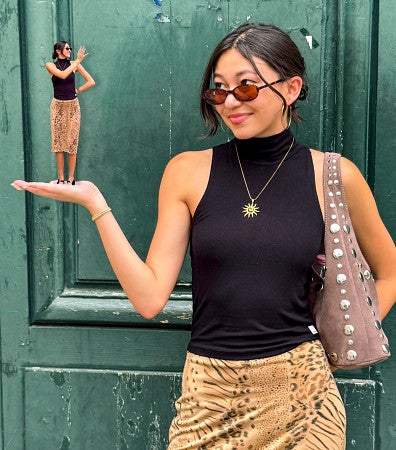
By Kaia Mikulka, Class of ’25
As much as anyone tries to deny it, justify it, live with it, fight against it or avoid the topic altogether, we just can’t escape it. Artificial intelligence (AI) has infiltrated our lives and our jobs.
As a recent advertising grad from the UO School of Journalism and Communication who aspires to be an art director or designer, AI scared me at first. I felt threatened, especially when I saw how quickly it could create images I would have spent hours editing, devise a campaign in an instant or design a logo in a millisecond.
So, naturally, I wanted to keep my enemy close. My goal was to understand the real mechanics of AI — its strengths, its limits and what that meant for the industry I was entering — while learning how to be a creator working with AI, not against it.
That’s how I came to apply to the GEO Global Works International Internship program in Paris, where I worked for Younzee, an AI startup that has a unique perspective on creativity.
Reimagining the wardrobe through AI and sustainability
Younzee wants to reimagine how people look at their wardrobe. The company focuses on solving that all-too-familiar problem of choosing an outfit, using AI informed by the expertise of personal stylists.
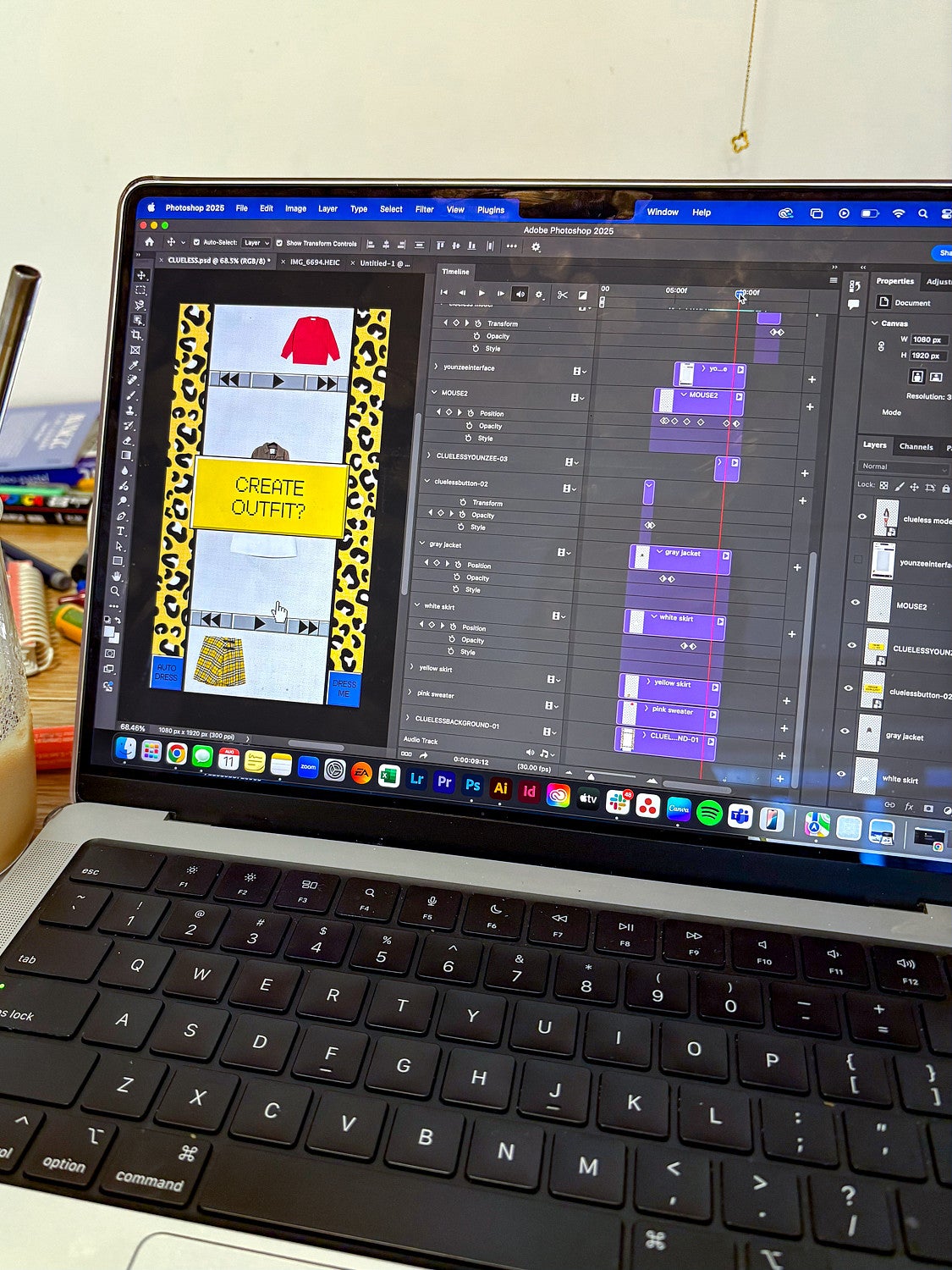
The app draws ideas from clothing already in the user’s closet to put together personalized outfits, much like the virtual wardrobe in the movie “Clueless.” It analyzes style, preferences and lifestyle to help people get dressed faster and more creatively.
Younzee also develops personalized AI avatars based on user-uploaded photos, creating a digital model with their real proportions. The app uses this avatar to style outfits from their existing wardrobes, allowing users to visualize how pieces will look on them before getting dressed.
If you don’t think the stress of picking out clothes qualifies as a problem, consider this: More than 70% of clothing in the average wardrobe is never touched, and globally, more than 92 billion tons of textile waste is produced each year.
Younzee wants to inspire people to buy less of what they don’t need and wear more of what they already have. The platform runs on AI, but its mission is rooted in sustainability: reducing waste, reshaping consumption and helping people rediscover the clothes they already have.
Using AI to boost efficiency
Coming into the internship, I discovered that Younzee’s social media could use a more youthful perspective to appeal to their target audience, who values aspirational and high-fashion content. They needed content that would motivate consumers to trust AI to do a very human thing: dress you well.
I was honored to develop a social media strategy for both Younzee and Fabrice Kouamo, Younzee’s CEO, who is a personal stylist with a following of his own. During my internship, I established the two brand strategies, built the content pillars and created content for Younzee’s Instagram.
Using inspiration from high-fashion editorial brands at the intersection of style and emerging technology, I chose a social media strategy rooted in refined imagery and subtle tech influence to reflect Younzee’s focus on innovation. This approach keeps the brand aspirational and accessible while positioning it as a progressive platform that elevates everyday style.
I oversaw the creative process, from concepting to directing photo shoots, defining a design identity, and editing video and animated content. I used AI platforms to learn new content creation skills, all while learning how an AI startup works from the back end.
My biggest takeaway from the internship was this: If you want things to change from how they’ve always been, you have to change the way you operate.
Throughout my time at Younzee, I shed my preconceptions about AI and began to see its potential to create real impact. In a startup environment, I had to concept, produce and edit faster. I had to be more efficient. Less perfect. And so I was forced to let go of my old habits. That’s when I truly started to become more creative.
Establishing Infinite Studios as a human-first AI platform
After a summer in Paris immersed in AI and fashion, I wanted to take things further. In the fall, I started working with another AI startup, Infinite Studios, headquartered in Los Angeles.
Infinite is led by its two cofounders, Adrienne Lahens, CEO and former TikTok executive, and Mehmet Bal, chief product and technology officer. It bridges the gap between advertisers and AI creators and artists, fully embracing AI’s role in advertising and cinema.
My task for Infinite Studios was similar to what I did for Younzee: Create a social presence that establishes trust and assures customers that Infinite Studios — even though it’s AI-centered — still holds human creativity and innovation at the forefront of its mission.
Learning the new creative language of AI
Infinite Studios allowed me to jump directly into the crux of the issue: Is it ethical to use AI to replace human creativity?
The definition of creativity is largely nuanced. I learned that a big question among those in the advertising field is: How much of the creative process can be replaced by AI before it becomes less human, less original and more … what’s the term? AI slop.
As a creative, it was a challenge at first because all of the content was to be AI-generated, which required me to learn skills that weren’t so familiar. The few months I spent at Infinite were a huge learning curve for me as I navigated new platforms to embrace a new kind of creativity. Instead of being in charge of every element, I had to learn to speak the language of AI-assisted workflow.
I say “language” because the way you prompt AI can be the difference between an image that feels indistinguishable from reality and AI slop. To be fluent in this language requires becoming highly proficient in using particular terminology, commands and a specific order of words, and it can involve hopping between different AI platforms that have different strengths.
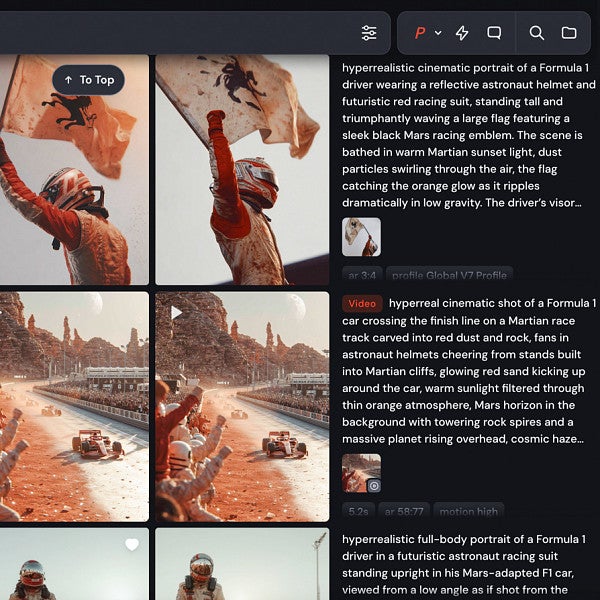
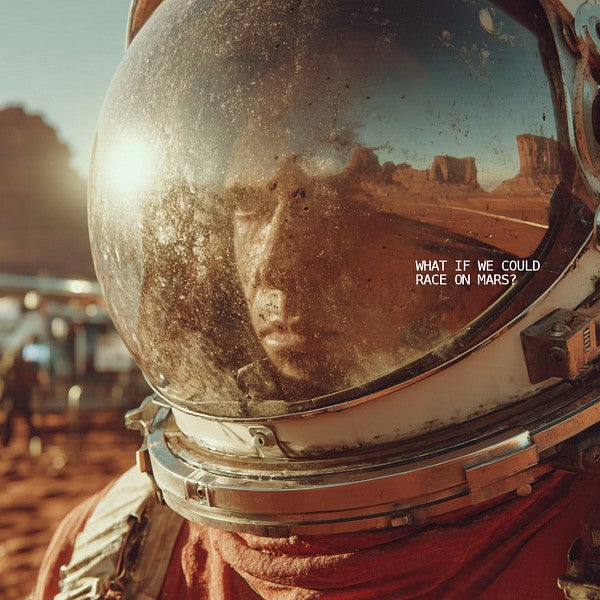
For Infinite’s social media, I used AI to generate a concept that imagines an F1 race on Mars, demonstrating how the technology can build cinematic worlds beyond the limits of traditional production. Here’s a glimpse into my AI workflow: crafting detailed prompts to guide the model toward the exact shot, mood and texture I envision.
AI strengthened my creative voice
The most powerful thing I realized during these two internships is something that actually contradicts my earlier beliefs. AI didn’t hinder or dull my creative mind. Instead, it made it stronger. It made me more self-aware because I needed to express to AI exactly what my ideas were with precision. I actually learned how to navigate through my creative mind faster, more easily and more successfully.
When I realized I could create anything I wanted, and the only hurdle was mastering the technology and writing prompts, I learned how to articulate my thoughts more clearly. The ideas came in waves, and I became more efficient with my projects.
Protecting creativity in a generation growing up with AI
All of this is not to say that some people won’t try to use AI to avoid developing their own creativity. And for this generation especially, that possibility has become a real point of concern.
Right now, educators are worried about protecting the creative development of young talent. When I spoke with Deb Morrison, distinguished professor of advertising and associate dean of undergraduate affairs at the SOJC, it became clear that a major worry is how to encourage emerging thinkers to learn their own kind of creativity without relying on AI as a crutch.
My take on it? Reframe the metaphor. AI is not your crutch; it is your current. It can’t teach you how to swim. But once you find your own stroke and can understand how to move with the current and when to pull back, it will amplify your creativity, place the impossible within reach and carry you toward the inevitable flow of the future.
As I continue navigating this shift myself, I’ve launched a written series featuring conversations with advertising professionals about AI’s role in the industry, focusing on how leaders are working to preserve the balance between efficiency and human creativity. If you’re curious how the landscape is shifting behind the scenes, or how to prepare yourself as a student entering this field, I’ll be sharing those conversations on my LinkedIn page.
Kaia Mikulka is a 2025 SOJC grad who majored in advertising with a minor in business. Kaia’s current interests include art direction, design and brand identity, and their intersection with AI and human nature.