
Student journalists sat on the panel asking questions of the candidates, interviewed the governor and kept the broadcast on schedule.
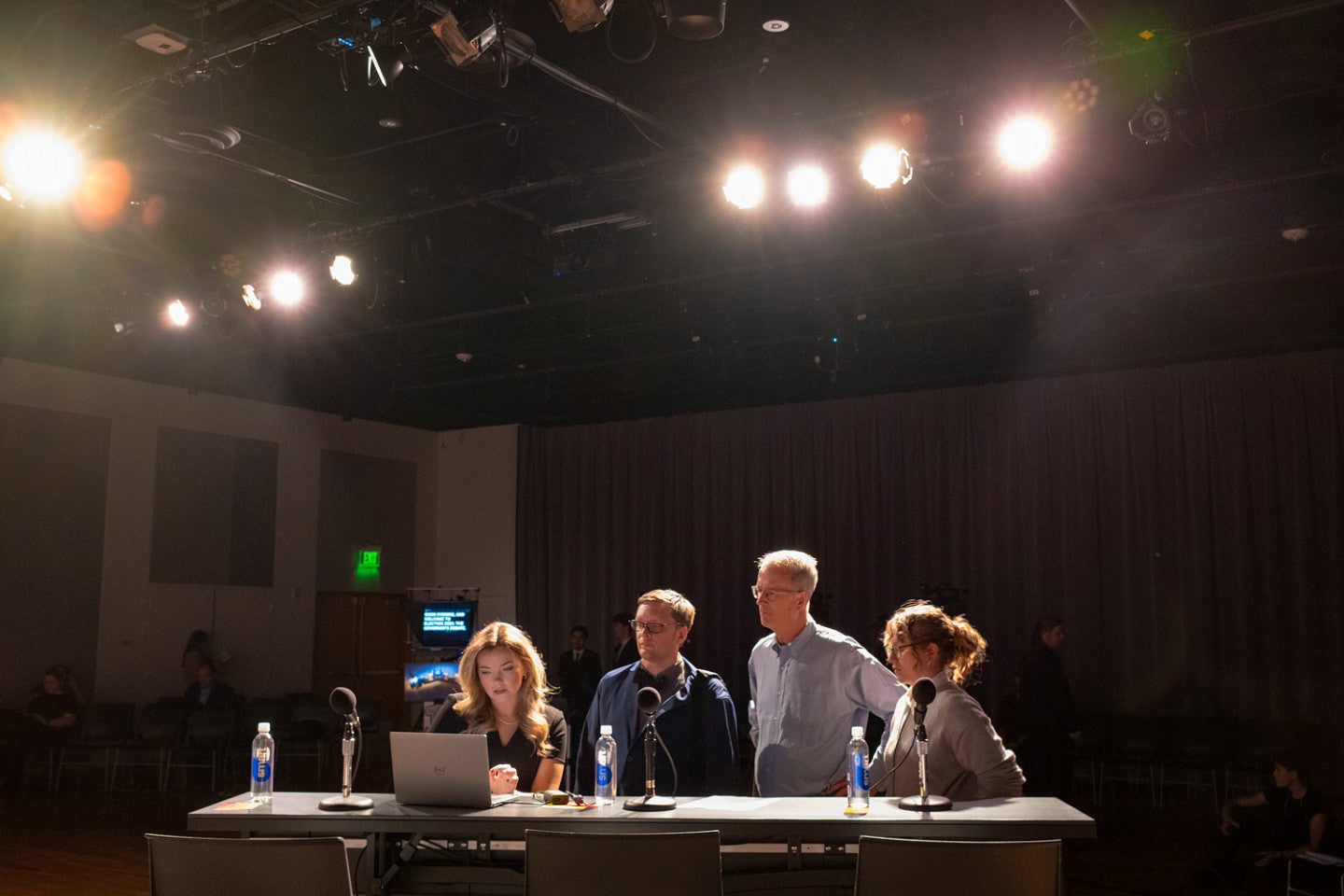
When Gov. Tina Kotek ’90 and State Sen. Christine Drazan met on the UO campus for Oregon’s first gubernatorial debate, students from the UO School of Journalism and Communication (SOJC) were running the clock, scrolling the teleprompter and putting questions to both candidates on live TV. Earlier in the day, a student journalist even interviewed the governor for The Daily Emerald.
The event — which was cohosted by the SOJC, the Oregon Journalism Project, Lookout Eugene-Springfield and local CBS affiliate KVAL — gave several students a front-row view into election politics and an authentic journalism and communication experience.
Fourth-year journalism student Bayla Orton served as a student panelist alongside journalism professionals Nigel Jaquiss of the Oregon Journalism Project and Ben Botkin, senior correspondent for Lookout Eugene-Springfield, asking questions of the two candidates during the debate.
As a panelist, Orton worked with Botkin and Jaquiss for three weeks, drafting questions independently and then collectively over Zoom calls. She was invited to participate only a month before the debate.
“We wanted to make sure we were asking a variety of different things for the candidates as well as wording things accurately and strongly,” Orton said.
Regina Lawrence, the Edwin L. Artzt Dean of the SOJC, kicked off the night by acknowledging how fitting it was that the SOJC was co-sponsoring the first gubernatorial debate.
“Elections shape the direction of our state, and bringing candidates, voters and journalists together is exactly the kind of work our school exists to support,” she told the audience, who were viewing from a watch party on campus, streaming on YouTube or watching the live broadcast on KVAL.
“Tonight also means something special to us as educators,” she continued. “SOJC students are behind the scenes right now supporting this broadcast, covering the debate for student-run publications and even sitting on tonight's panel. For emerging journalists, there's no classroom substitute for standing this close to democracy at work.”
Orton sat front and center, asking the candidates a total of five questions.
“Being on the panel representing the SOJC felt really, really cool,” Orton said. “It was just something I never expected I would end up doing here at all, like being on live TV talking to politicians, so it was just a really awesome experience,” Orton said.
Landing an exclusive interview
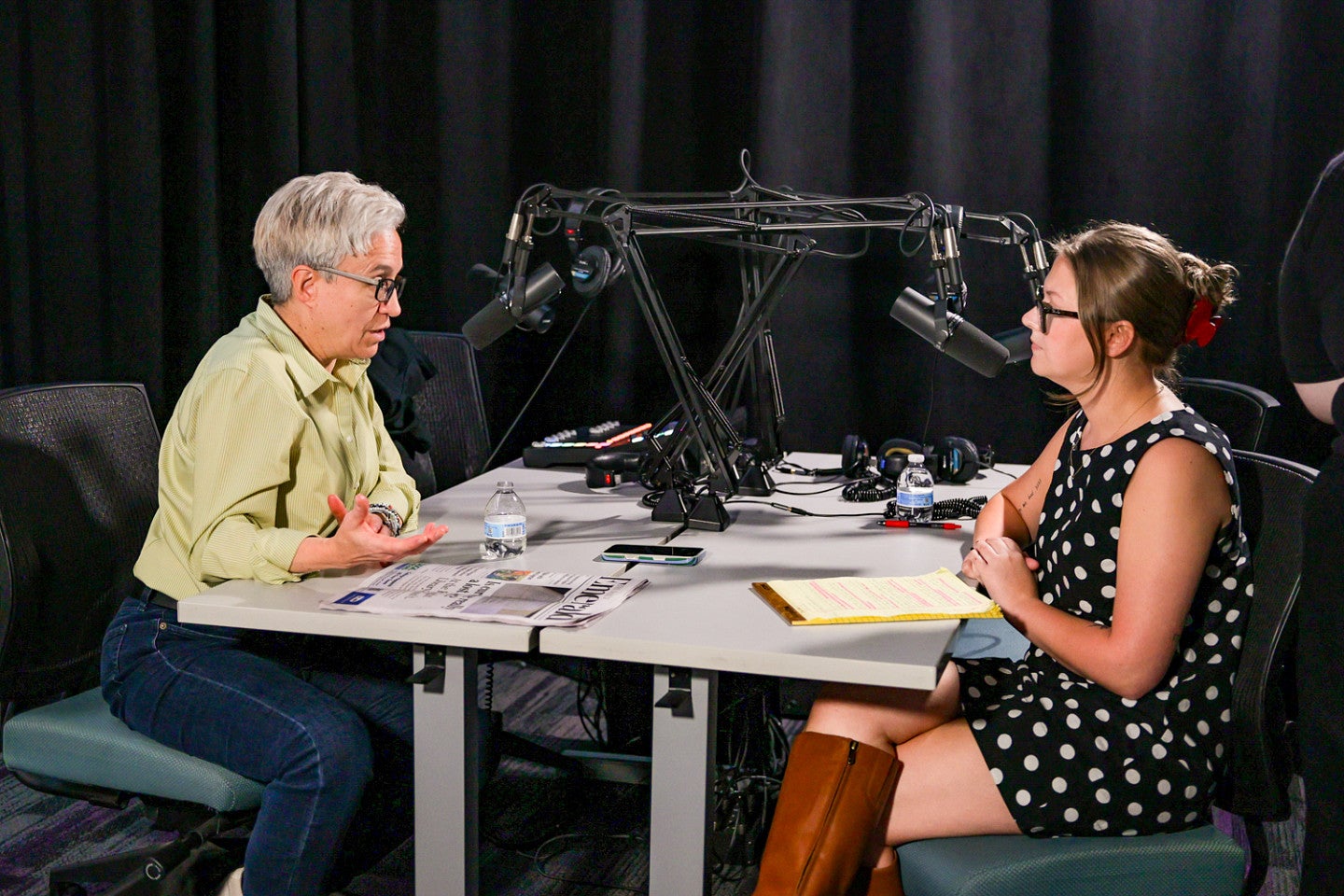
Orton wasn’t the only SOJC student directing her questions at politicians. Third-year journalism and political science major Billie Corsetti was the only media personnel to gain an exclusive interview with Kotek before the event. Corsetti is the co-associate news editor of The Daily Emerald.
“I’m pretty involved with political science and Oregon politics,” Corsetti said. “Getting to interview the governor was nerve-wracking but also [gave me] a sense of pride, and for me a step in the direction of the career I want to go into.”
Corsetti was also given press credentials to sit in on the live recording of the debate, where she reported on the key takeaways. It was an opportunity only a handful of people got because there was no live audience for the debate.
“I've never done something like this. This was my first time being in a recorded live-streamed debate like this,” said Corsetti. “My goal for this story was to make it different than what the livestream would provide because you can't beat live coverage.”
Getting behind-the-scenes broadcast experience
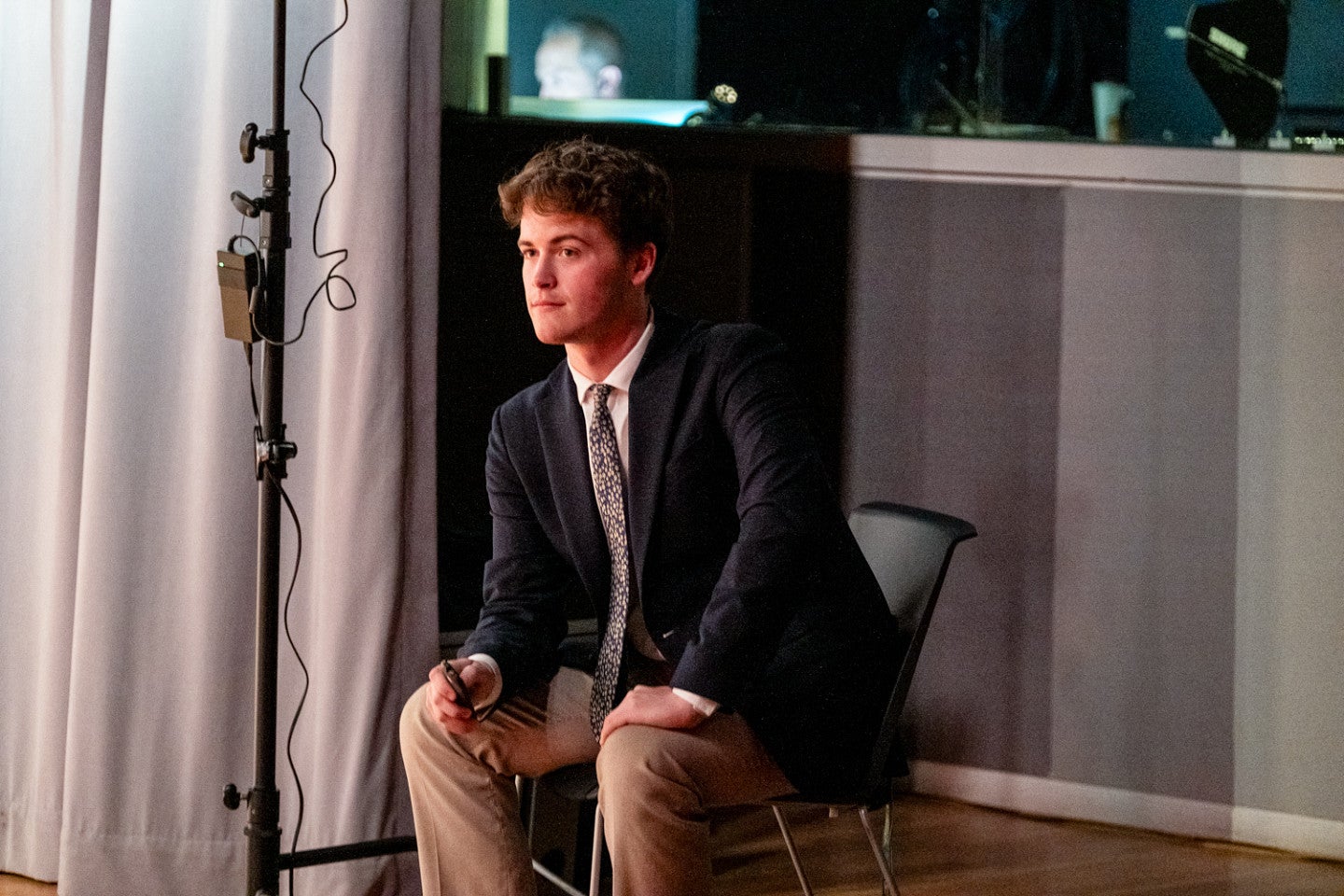
In addition to Corsetti and Orton, three Duck TV students worked with KVAL to make sure the debate and livestream went smoothly. Fourth-year journalism major Gretchen Wackler was the visual timekeeper. She sat with two cards: a yellow she held up when candidates had 15 seconds left to speak, and a red one she held up when the speaker’s time was up and the mic was about to be cut.
MCayden Marlar, a journalism and political science major, was the official timekeeper. He sat off to the side with a remote control that would reset the clock after each candidate's time was up and when candidates made 30-second rebuttals.
Justin Santos, a third-year broadcast journalism major, ran the teleprompter for moderator Kendall Bartley from KVAL.
“Being this close to ‘democracy at work,’ as our dean put it, is exciting, and it opens up so many opportunities for where journalism can take me and what I can truly achieve with journalism in the long run,” Marlar said.
As Lawrence put it, there's no classroom substitute for standing this close to democracy, and the SOJC students involved echoed this sentiment.
“Honestly, I felt really lucky to have been chosen for that opportunity while I'm still a college student,” Orton said. “I'm going to look back on it for the rest of college for sure — well, for the rest of my life for sure.”
Lily Reese is a fourth-year journalism major at the SOJC, with a minor in food studies. She is passionate about storytelling, sustainability and lifelong learning. Lily loves to write, and you can find her work in Ethos magazine, Eugene Weekly and Ascend magazine, where she is director.
Related Stories

