
SOJC doctoral candidate Luda Gogolushko uses research and storytelling to reshape how disability is portrayed — and perceived.
by McKenzie Leary, Class of ’26

Meet Luda Gogolushko
Why you chose the SOJC Communication and Media Studies Ph.D program:
The range of faculty expertise and the SOJC's overwhelming support for my disability in media interests and passions drew me here.
Biggest career or school accomplishment:
Probably designing and teaching my own class on disability and media technology, which led me to receive the 2024 Kimble First-Year Teaching Award.
SOJC faculty who made the biggest impression on you:
Amanda Cote, Ph.D., who doesn't teach at UO any longer, was a great mentor who guided me in the right direction and was a great teacher who could explain complex things in understandable ways.
Favorite class or project:
I enjoyed taking Advertising and Culture with David Ewald, who brought in many interesting professional examples and pushed students to really think outside the box.
Best thing about the SOJC:
The diversity of student interests, projects and voices.
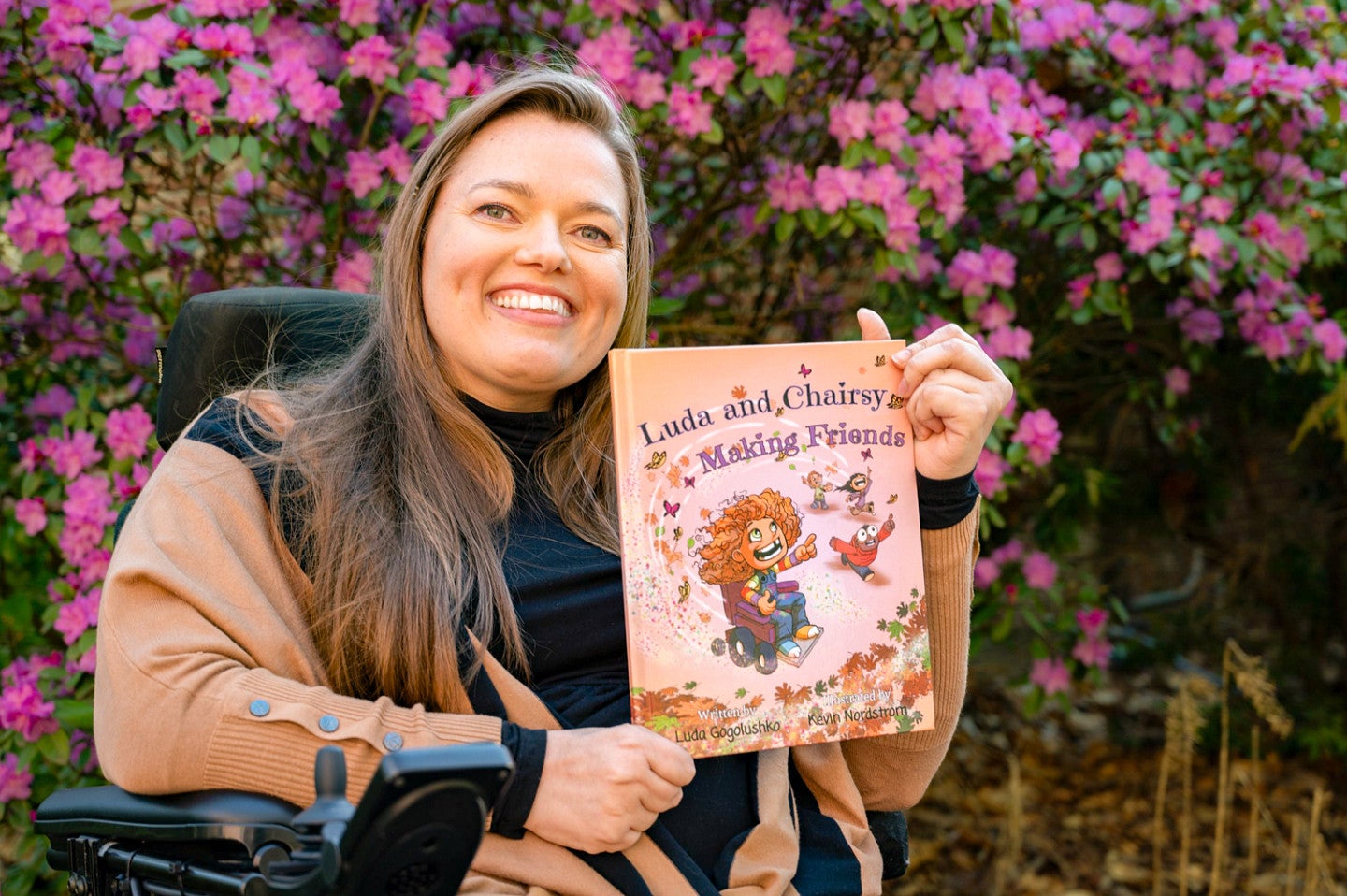
For Luda Gogolushko, advocacy isn’t a choice; it’s a lifelong calling.
Gogolushko, MS ’21, is a doctoral candidate in the Communication and Media Studies Ph.D. program in the UO School of Journalism and Communication (SOJC), where she’s dedicating her research, teaching and creative work to answer the question: How does disability representation in media impact those living with disabilities?
Before joining the SOJC, Gogolushko received her bachelor’s in recreation and tourism management and her master’s in communication studies at California State University, Northridge. As a student, she became interested in disability access and helped secure a grant for an inclusive and adaptive ropes course on campus. But Gogolushko has always been passionate about stories and disability advocacy.
“When I was 13, I got my first power chair. I’ve lived with navigating barriers and obstacles most of my life,” she said. “It’s just so hard for me not to advocate because it’s so frustrating and unjust to see (barriers) everywhere. I don’t want other people to experience that.”
A passion for disability representation in media
Growing up with a disability, Gogolushko noticed how few authentic representations of disability existed in the media. “Back in 2015, there was nothing,” she said. “It’s only been in the last five years that we’ve really started to see progress.”
That realization drew her to Oregon and the SOJC, where she could pair her lived experience with research on how media representations impact perceptions of disability.
Gogolushko first pursued her Advertising and Brand Responsibility Master's at the SOJC. While in the program, she rebranded INCLUDAS, a small press focused on representing disabled authors and characters.
Through her coursework, she discovered a new framework for the brand, shaping INCLUDAS around five pillars: authenticity, social good, resilience, inclusivity and representation. These pillars have guided her approach to leadership and branding.
“It started as a passion project, but through the master’s program, I learned how to tell people, ‘This is important. This is our goal,’ in a way that attracted people to support our cause,” she said.

How does media shape a sense of value?
After earning her master's degree in 2021, Gogolushko stayed at the SOJC to pursue her Ph.D. in Communication and Media Studies. Her dissertation explores the impact of disability representation — or lack thereof — on the lived experiences of disabled people. Through focus groups and qualitative research, she’s listening to voices from the disabled community about how media shape their beliefs, identities and sense of value.
Her findings are sparking new conversations. Many participants described how a lack of media representation made them feel invisible or unvalued, while harmful portrayals distorted how others perceived them.
“One of the surprises I didn’t even expect was the impact of no representation,” she said. “Having no disability representation made people feel alone or like they didn’t belong.”
Her research proved that “if disabled people saw more good, authentic representation played by real disabled people, they would have more self-confidence and would accept their disability pride more,” Gogolushko said.
Inclusivity in digital spaces
Her work in the SOJC extends beyond research and into the classroom. In winter 2024, she designed and taught her own course, Disability and Media Technology, which explored how digital spaces affect our thinking about disability.
“I got to explore different aspects of disability and media that I’ve never experienced before,” Gogolushko said. “It was really interesting to stretch and understand the design of how we interact through technological spaces. For example, consider how a laptop or a phone is designed and for whom, and how that design gives access to some people and not others.”
Set to graduate in spring 2026, Gogolushko is already thinking about how to bring her research to a broader audience. Whether consulting on media projects, continuing to grow INCLUDAS or creating a disability-centered bookstore, her goal is to reshape how people experience and understand disability.
“There are different ways of being included and different ways of experiencing life,” she said. “We shouldn’t be forced into having one way of doing life.”
At the SOJC, Luda Gogolushko isn’t just studying media, she’s rewriting it.
McKenzie Leary is a fourth-year public relations major in the UO School of Journalism and Communication, minoring in global studies. She is passionate about creating multimedia narratives, traveling and advocacy. McKenzie loves having the opportunity to share people’s stories and has finished her first novel.