
Journalism students are reimagining local news in rural towns by focusing on community engagement and solutions through active listening.
by McKenzie Leary, Class of ’26
The UO School of Journalism and Communication’s (SOJC) Engaged Journalism class is teaching students how to listen and interact with the communities they cover.
Taught once a year by Professor of Practice Andrew DeVigal, director of the SOJC’s Agora Journalism Center, the course challenges students to reimagine local news, starting with understanding communities’ information needs.
In previous years, the class has partnered with the Oregon communities of La Pine, Hermiston, Oakridge and other areas across the state. During winter term 2026, the class focused on Newport and the broader Lincoln County area.
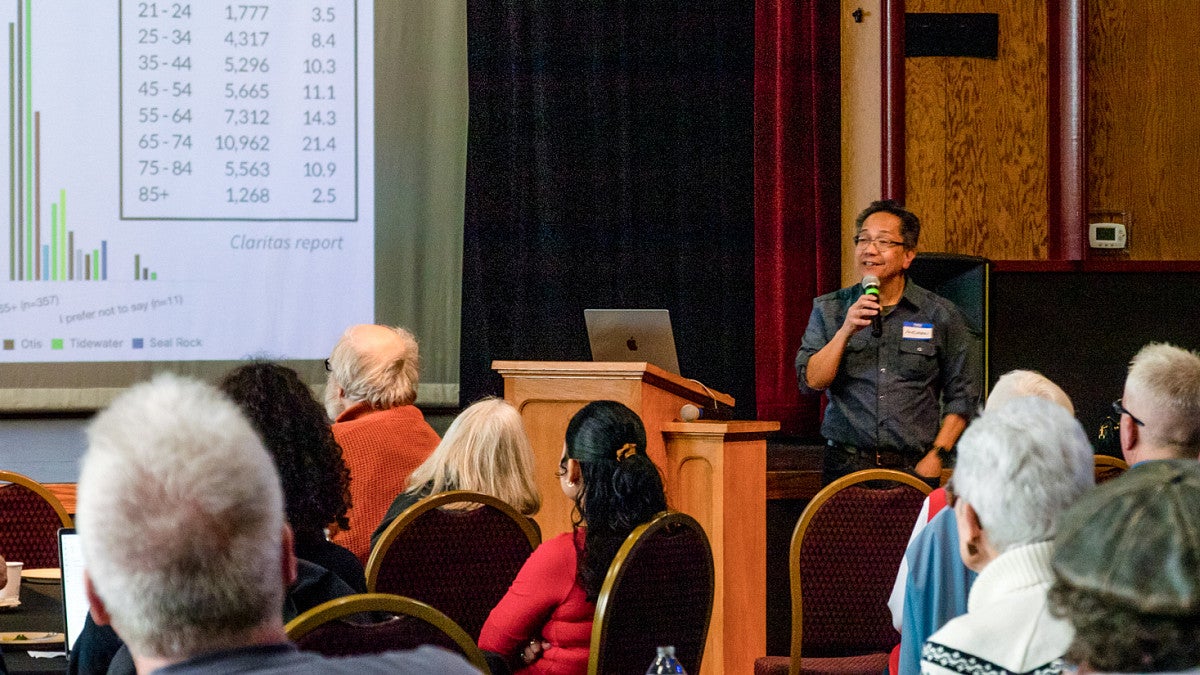
To produce the most meaningful work for their community partner, the class followed a structured timeline. In January, students distributed a community survey asking residents what they want and need from their local news organizations. In February, the class analyzed those responses to identify key concerns.
“We have a deep belief at Agora that those most impacted can offer the most meaningful solutions toward those problems,” DeVigal said. “We want to be able to understand the people who are living there to offer solutions.”
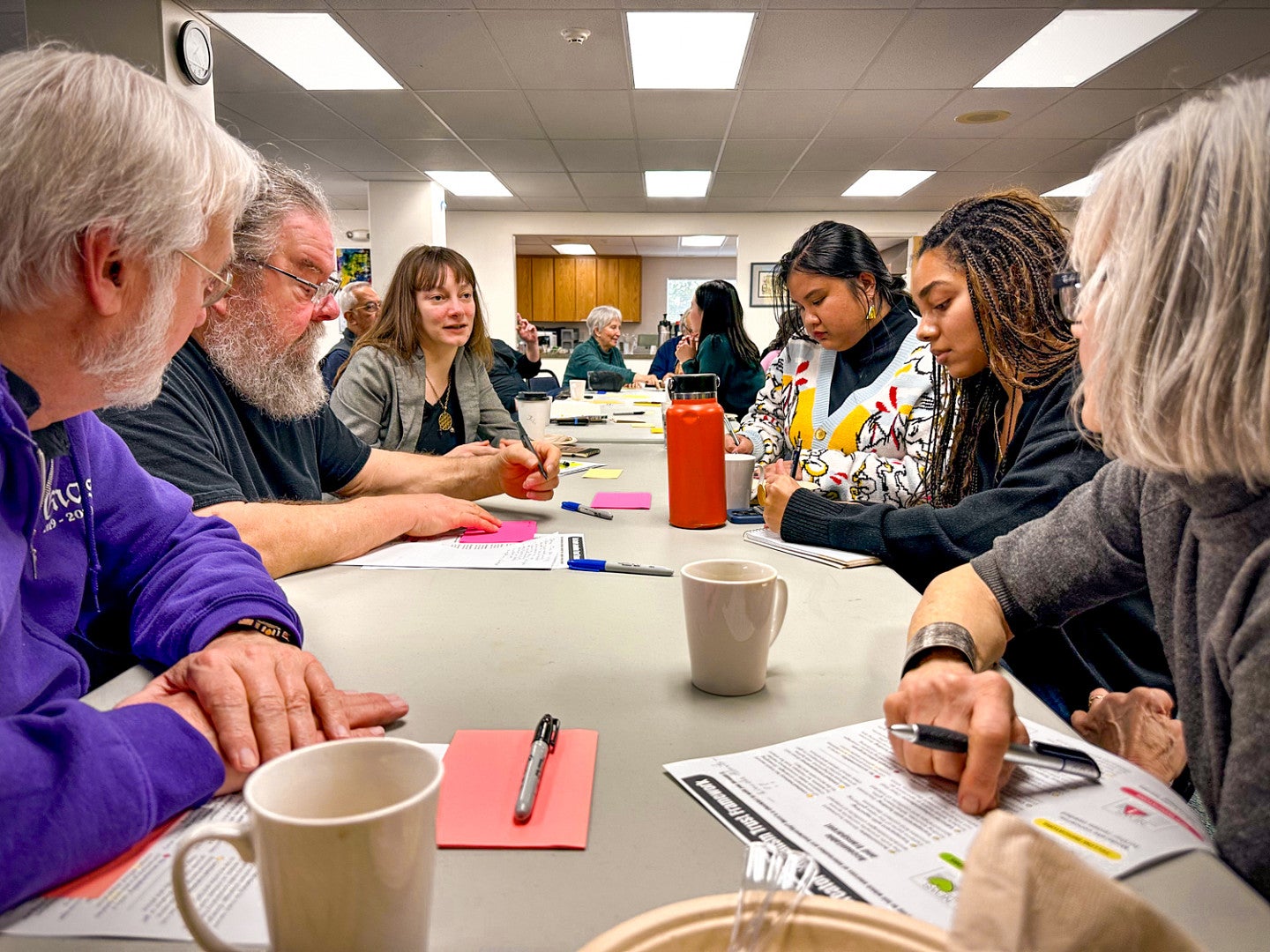
During a weekend trip to Lincoln County, the students hosted listening sessions for the residents who completed the survey.
The sessions were held virtually and in person at locations including Atonement Lutheran Church in Newport and the Lincoln City Cultural Center. Students sat at tables with residents to talk, share early findings and ask questions about how local news could better serve the community.
The conversations were designed not only to gather information, but to involve residents in shaping potential solutions.
“We’re not going into these conversations with a story in mind,” DeVigal emphasized. “We’re eager to hear from community members about stories they most care about.”
Building trust by implementing feedback
Taking the class opened journalism student Ian Valleau’s eyes to the realities many communities face when trying to access local news.
Growing up in Portland, Valleau, class of ’26, said he always had easy access to news. Visiting Lincoln County showed him how different the experience can be in smaller or rural communities.
“It was a culture shock,” Valleau said. “It’s crazy just how difficult it is to get the news. Hearing that from them was really important.”
For journalism student Gracie Del Rosario, class of ’26, the course drove home the importance of trust. During the listening sessions, Del Rosario heard from residents about their experiences finding and verifying news.
Concerns about transparency and trust came up frequently, along with questions about where residents could find reliable information during emergencies like wildfires or tsunamis.
These concerns reinforced the importance of local journalism.
Following the listening sessions, students compiled their findings into a public report that offers six recommendations for improving civic health through stronger local journalism:
- Build a coordinated information infrastructure to reduce fragmentation and strengthen sustainability.
- Establish a resilient emergency communication system and ensure residents know how to use it.
- Strengthen trust through transparent editorial practices and investment in journalistic capacity.
- Expand civic accountability through structured coverage and accessible public information.
- Formalize and support informal networks as essential information infrastructure.
- Expand representation through geographic coverage, multilingual access and youth engagement.
The mission of engaged journalism is to enable a robust feedback loop between the newsroom and community members, so local news organizations can deliver information that’s accessible, trusted and relevant to the communities, DeVigal said.
The next Engaged Journalism class will be offered fall 2026.
“We all have aspirations to be journalists in the big global organizations,” Del Rosario said. “But at the core foundation, community journalism is some of the most important journalism we can be doing right now.”
McKenzie Leary is a fourth-year public relations major in the UO School of Journalism and Communication, minoring in global studies. She is passionate about creating multimedia narratives, traveling and advocacy. McKenzie loves having the opportunity to share people’s stories and recently finished her first novel.